
Researchers develop an innovative electrochemical strategy for integrated food shell waste management and nutrient recovery from wastewater
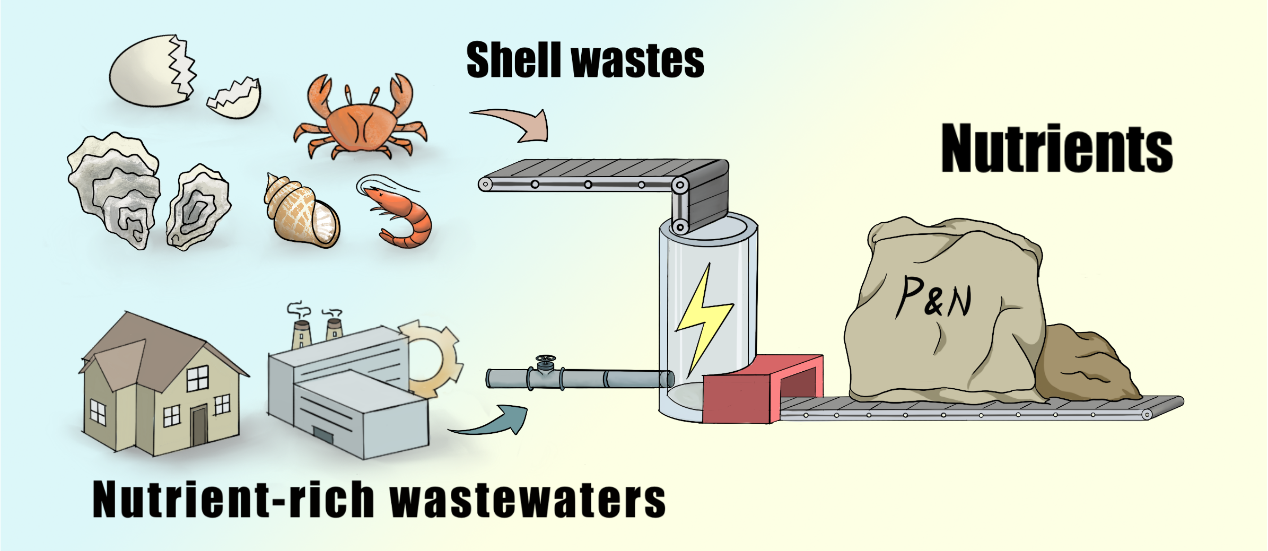
The ever-increasing global population has led to a surge in food waste generation, of which calcium (Ca) or magnesium (Mg)-rich shell waste is a typical representative. Beyond the urgent issue of shell waste, we are also confronted with a critical dilemma regarding nutrient resources—phosphorus (P) and nitrogen (N)—which are increasingly scarce as essential agricultural resources, yet excessive as environmental pollutants.
To tackle these challenges, a research team led by Assistant Professor Yang Lei from the School of Environmental Science and Engineering at the Southern University of Science and Technology (SUSTech) has proposed a novel electrochemical strategy to upcycle shell waste (e.g., eggshells, oyster shells, and snail shells) for efficient recovery of nitrogen and phosphorus from wastewater.
Their findings, titled “Electrochemical Upcycling of Shell Waste for Sustainable Nutrient Recovery from Wastewater,” have been published in Environmental Science & Technology.

Figure 1. (a) Schematic pathway of shell waste upcycling with localized monitoring. pH (b) and Ca²⁺ (c) dynamics at sampling spots during electrolysis.
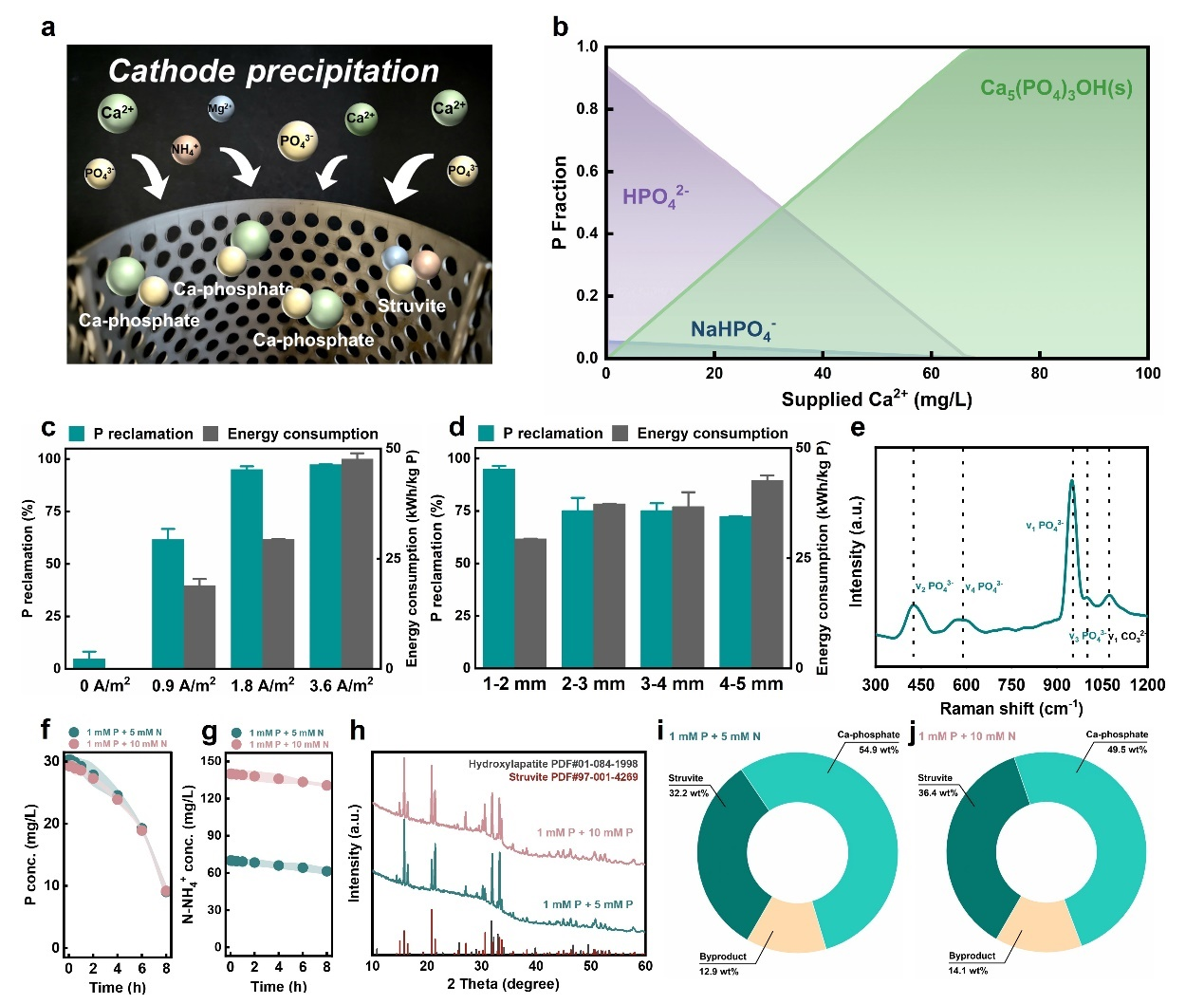
The core mechanism involves anode-driven water oxidation, creating an acidic microenvironment that facilitates shell waste decomposition (Figure 1). Meanwhile, water reduction at the cathode generates OH−, establishing a high-pH region for crystallization (Figure 1). For instance, Ca²⁺ released from oyster shells combines with phosphate (PO₄³⁻) under cathode-induced alkaline conditions to form calcium phosphate precipitates (Fig. 2a-e). In a similar framework, Mg-rich shells (e.g., snail shells) release Mg²⁺, enabling simultaneous recovery of phosphate and ammonium (NH₄⁺) as struvite (MgNH₄PO₄) (Fig. 2f-j).

Figure 2. (a) Schematic pathway for nutrient recovery by precipitation at the cathode. (b) Thermodynamic modelling regarding P. (c,d) Impacts of current density and shell size on P recovery and energy use. (e) Product Raman spectrum. (f,g) P and N removal with snail shells. (h) Product XRD pattern. (i,j) Product composition analysis.
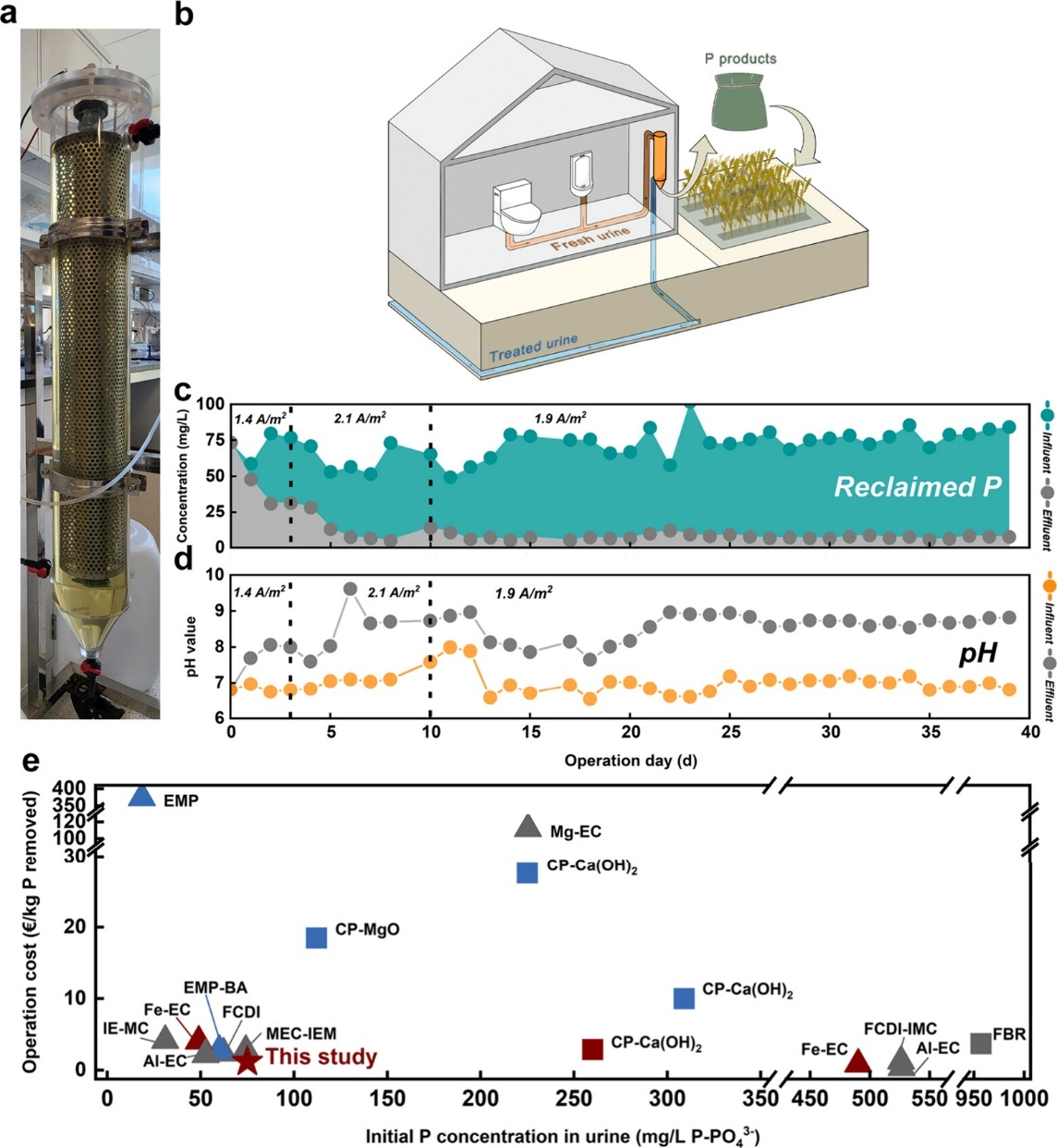
To validate the practical applicability of the proposed electrochemical upcycling strategy, the research team designed and constructed a prototype in a household setting, enabling eggshell upcycling and fertilizer recovery from urine (Figure 3a-b). The system achieved stable and efficient phosphorus recovery (>85.7% at 1.0 kWh/m³) (Figure 3c-e), with recovered products exhibiting high P content (13.1 wt%) and bioavailability (93.3%), meeting fertilizer reuse standards. The “eggshell upcycling-urine treatment-fertilizer production” scenario has been proven to significantly reduce carbon emissions (76.5%) and show promising economic viability.

Figure 3. (a) Prototype photograph. (b) Process schematic for a household setting. (c) stable P reclamation and (d) pH over long-term operation. (e) Economic analysis compared to existing methods.
Ph.D. student Zhengsheng Zhan from the School of Environmental Science and Engineering is the first author of the paper. Assistant Professor Yang Lei is the corresponding author, with SUSTech serving as the first corresponding institution.
Paper link: https://pubs.acs.org/doi/full/10.1021/acs.est.5c09352