

© 2026 All Rights Reserved. 粤ICP备14051456号
2022-03-02
View:16
Researchers using multiple high-resolution satellite observations have shown a doubling of carbon loss due to forest clearance since 2001 across the tropics, a vitally important world ecosystem that stores ~250PgC in its woody vegetation. The findings are critical because they suggest that existing strategies to reduce forest loss are unsuccessful; this failure underscores the importance of monitoring deforestation trends following the new pledges made in Glasgow.
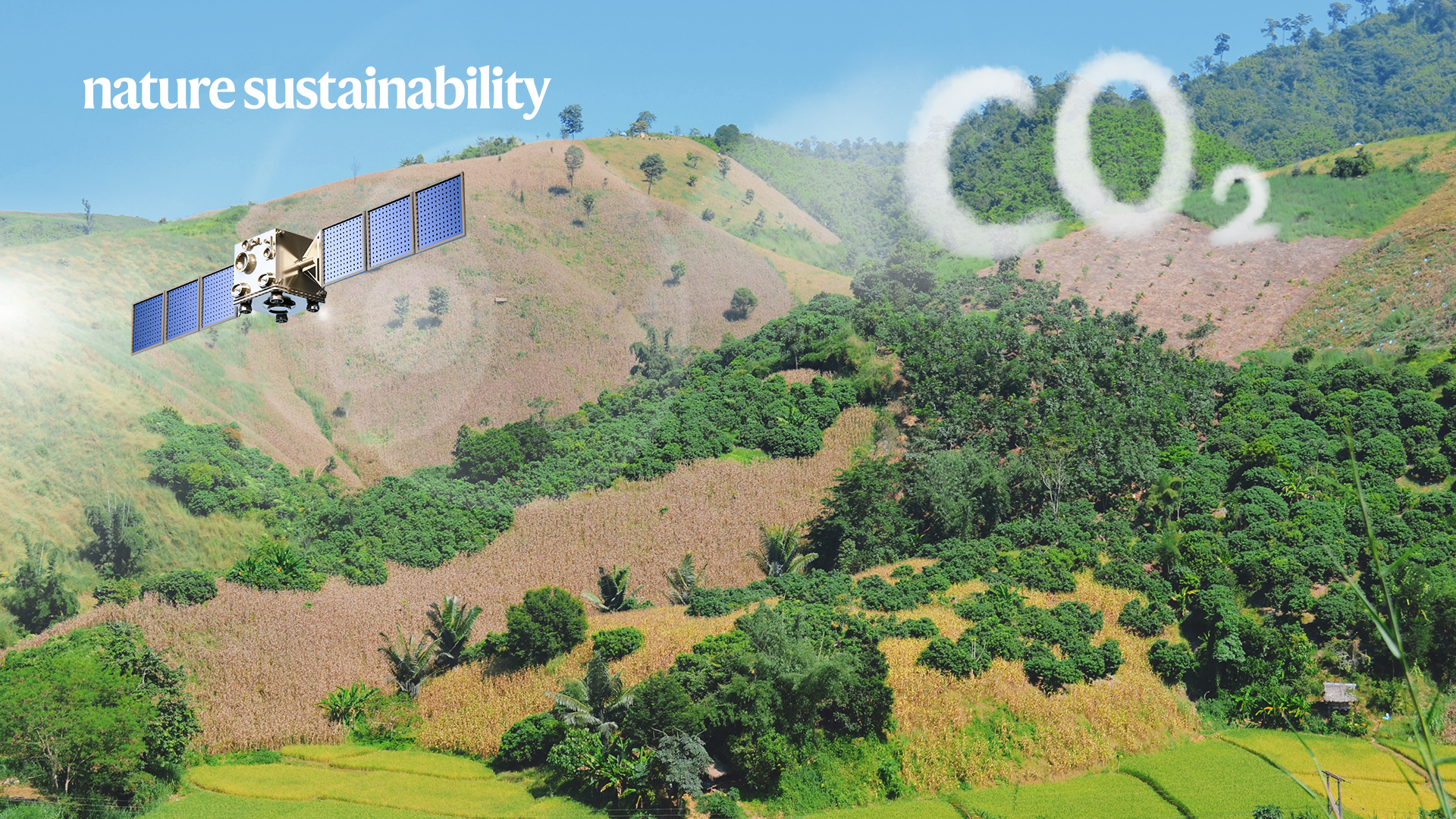
A research team consisting of Yu Feng, a Ph.D. candidate at the Southern University of Science and Technology (SUSTech) and the University of Hong Kong (HKU), and Zhenzhong Zeng, Associate Professor at SUSTech, recently published their findings where they used multiple high-resolution satellite observations to investigate the trajectory and drivers of forest carbon loss in the 21st century. Their research, entitled “Doubling of annual forest carbon loss over the tropics during the early twenty-first century ”, was published in Nature Sustainability.
The researchers were surprised to find a doubling of gross tropical forest carbon loss worldwide from 0.97 ± 0.16 PgC yr−1 in 2001–2005 to 1.99 ± 0.13 PgC yr−1 in 2015–2019. Feng said the doubling and acceleration in the loss of forest carbon, including biomass and soil organic carbon, is primarily driven by agricultural expansion and differs from current estimates of land-use change emissions in the assessments of the global carbon budget that shows a flat or decreasing trend.
Tropical forests are the largest terrestrial component of the global carbon cycle, storing about 250 Pg biomass carbon in its woody vegetation and absorbing ~70 Pg atmospheric carbon per year through photosynthesis. Loss of forests could be devastating because the stored carbon stocks in biomass and soil are losing and also the function of sequestering atmospheric carbon. In addition to carbon, Feng said conversion of forests to agricultural lands also induces other environmental consequences, like biodiversity extinction and land degradation.
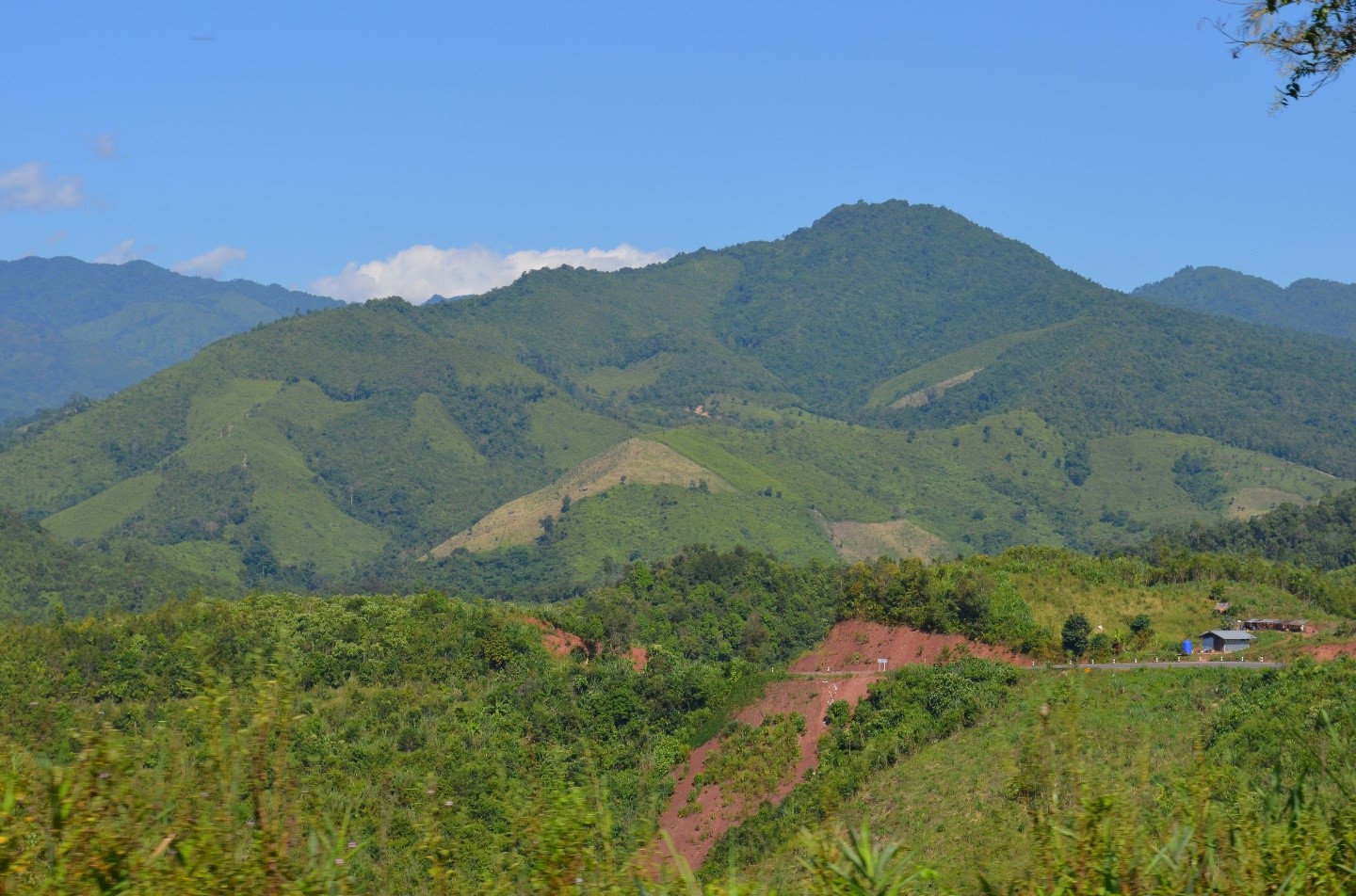
Prof. Zeng said that most of the tropical forest carbon loss (82%) has resulted from agricultural expansion, for example, shifting cultivation, particularly in Africa. Some agricultural lands may reappear as forested due to abandonment or policies. “However, we still observed ~70% of former forest lands converted to agriculture in 2001–2019 remained so in 2020, confirming a dominant role of agriculture in long-term pan-tropical carbon reductions on formerly forested landscapes”, he said.
“The 2014 New York Declaration on Forests promised to halve tropical deforestation by 2020. However, our results demonstrate a failure to the commitment and highlight the colossal challenge posed by the 2021 Glasgow Leaders’ Declaration on Forests and Land Use, which pledges to halt forest loss by 2030”, said Chunmiao Zheng, Chair Professor of the School of Environmental Science and Engineering at SUSTech and a member of the research team.
In addition to Yu Feng, Zhenzhong Zeng, and Chunmiao Zheng, other researchers from the SUSTech team included Ms. Jie Wu, Dr. Dashan Wang, Ms. Xinyue He, Dr. Rongrong Xu, Dr. Zhilin Guo, Prof. Yi Zheng, Dr. Peng Xu, and Mr. Xin Jiang.
Other members of the joint research team included Dr. Timothy D. Searchinger, Mr. Yiheng Tao, and Prof. Eric F. Wood of Princeton University; Prof. Alan D. Ziegler of MaeJo University (MJU); Dr. Paul R. Elsen of the Wildlife Conservation Society (WCS); Dr. Philippe Ciais of Laboratoire des Sciences du Climat et de l’Environnement (LSCE); Dr. Liqing Peng of the World Resources Institute (WRI); Profs. Dominick V. Spracklen and Joseph Holden of the University of Leeds; Prof. Xiaoping Liu of Sun Yat-Sen University; Prof. Ji Chen of HKU; Prof. Xiao-Peng Song of Texas Tech University; and Prof. Venkataraman Lakshmi of the University of Virginia.
This project was supported in part by the National Natural Science Foundation of China (NSFC) and the Start-Up Fund provided by SUSTech.
Paper link: https://doi.org/10.1038/s41893-022-00854-3
2026-03-10
2026-09-08
A delegation of 13 students from Southern University of Science and Technology (SUSTech), Zhejiang University and the University of Science and Technology of China (USTC), accompanied by four SUSTech faculty members including including two affiliated with the State Key Laboratory of Soil Pollution Control and Safety, concluded a 12-day summer school at Flinders University in August, 2026, hosted by the University’s National Centre for Groundwater Research and Training (NCGRT).Throughout the program, the students participated in a wide range of educational activities covering water resources, environmental health, groundwater modeling, managed aquifer recharge, salinity management, mining sites management, virtual reality hydrology, and nature-based solutions for surface water, groundwater and soil pollution.A highlight of the visit was a series of field trips showcasing South Australia’s unique natural environments. These included an overnight excursion to a global showcase of integrated surface and groundwater management exemplified by the Murray-Darling Basin. Visits to the St Kilda Mangroves highlighted ecohydrological approaches to coastal mangrove conservation. While Hallett Cove featured the most famous glacial striation on pre-Cambrian rocks. Happy Valley Reservoir, Oaklands Wetland, and Port Willunga Beach, with their wildlife, water management and well-exposed sedimentary rock formations, left strong impressions on our students. Students also attended research seminars and explored Flinders University’s teaching and research facilities.This summer school provided an excellent opportunity for students to engage with Flinders University staff, students, and researchers, experience Australian approaches to soil and groundwater pollution control and safety research, and strengthen the institutional ties between SUSTech and Flinders University, while fostering international connections and cross-cultural learning. The visit was made possible through a combination of support provided by SUSTech and the Fundamental and Interdisciplinary Disciplines Breakthrough Plan of the Ministry of Education of China(JYB2025XDXM909).During the visit, Chair Professor Yan ZHENG from SUSTech delivered a research seminar on arsenic detection in the developed and developing world. Flinders University noted that its academic community was privileged to learn from her expertise.SUSTech expresses its gratitude for the incredible partnership with Flinders University at the conclusion of the program.
2026-04-22
On April 22, the Frontiers Planet Prize announced its list of 25 National Champions for 2026. Hong WANG, a 2025 graduate of the School of Environmental Science and Engineering at the Southern Universi
2026-04-20
On the morning of April 17, 2026, a delegation from Flinders University (Australia), led by Professor Colin Stirling, President of Flinders University, visited the Southern University of Science and T
2026-04-08
Hydrological models are foundational tools for water resource management, agricultural planning, flood and drought mitigation, and ecosystem protection. A long-standing challenge in hydrology is devel
 |