

© 2026 All Rights Reserved. 粤ICP备14051456号
2022-04-06
View:15
There is an increasing food demand with a growing population and limited land for agriculture. However, conventional agriculture with nitrogen (N) fertilizer applications is a key source of ammonia (NH3) emissions that cause severe haze pollution and impair human health. Organic and conservation agricultural (OCA) practices are thereby recommended to address these dual challenges; however, whether OCA provides co-benefits for both air quality and crop productivity is controversial.
Professor Yi Zheng and Associate Professor Peng Xu’s team from the School of Environmental Science and Engineering (ESE) at the Southern University of Science and Technology (SUSTech) recently revealed the role of organic and conservation agriculture in ammonia emissions and crop productivity in China.
Their research, entitled “Role of Organic and Conservation Agriculture in Ammonia Emissions and Crop Productivity in China,” was published in Environmental Science & Technology, an impactful environmental science and environmental technology research journal.
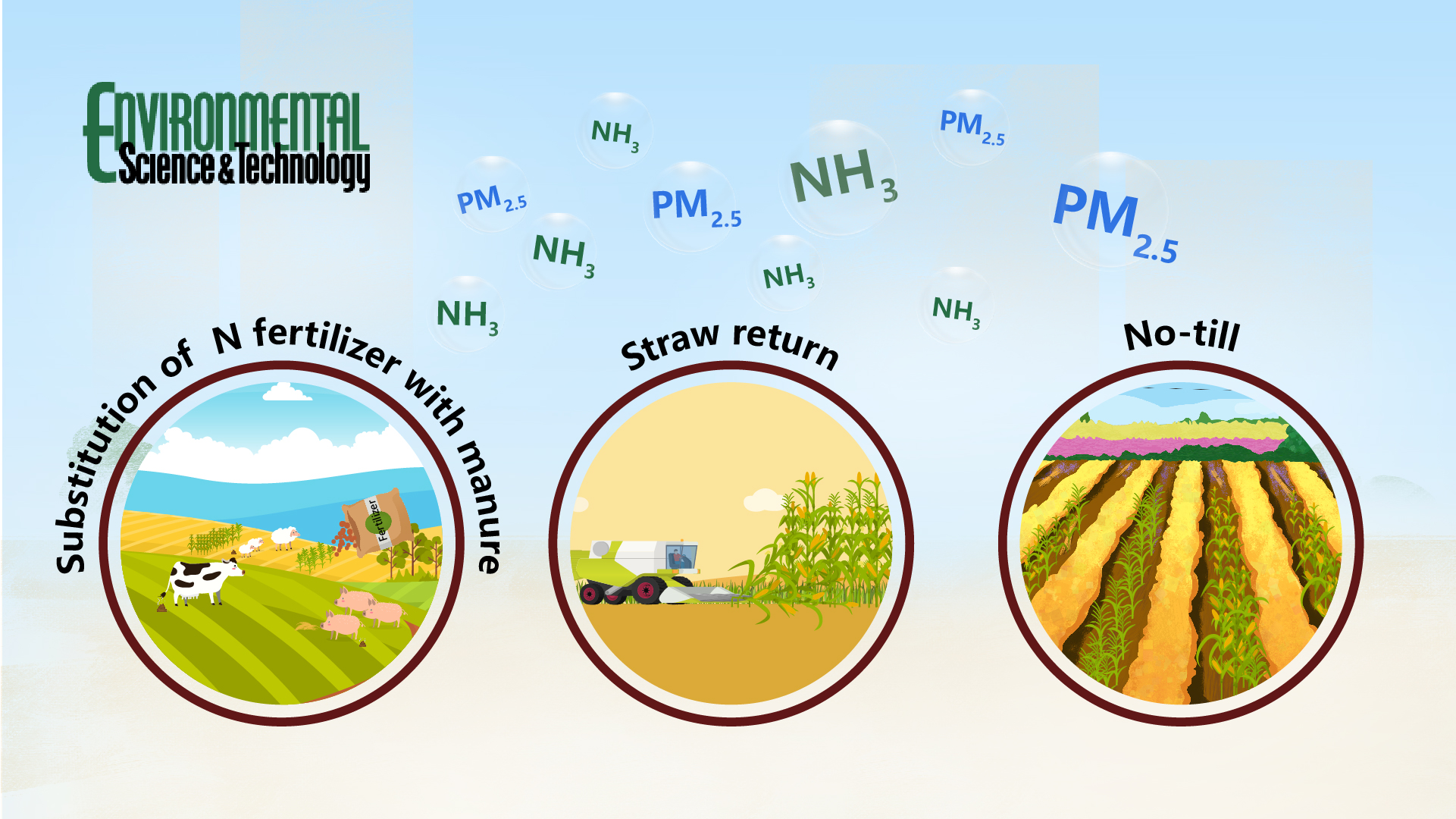
In this study, the researchers performed a comprehensive meta-analysis of the effect of organic, conservation, and conventional agriculture on crop yield, nitrogen use efficiency (NUE), and NH3 emissions among China’s three main staple crops, i.e., wheat, maize, and rice. In their approach, they referred to organic agriculture as the substitution of N fertilizers with livestock manure, and conservation agriculture as the adoption of no-till and straw return (crop straw applied to the field directly or after mechanical pulverization or decomposition) practices. Hence, for their meta-analysis, they first used machine learning to identify the main drivers of crop yield, NUE, and NH3 emissions under different agricultural practices among China’s three main staple crops. Next, they quantified the synergistic effects of these key impacts across different crop types, soil properties, and climates. Finally, they discussed how organic and conservation agriculture could contribute to achieving sustainable development goals (SDGs) in China.
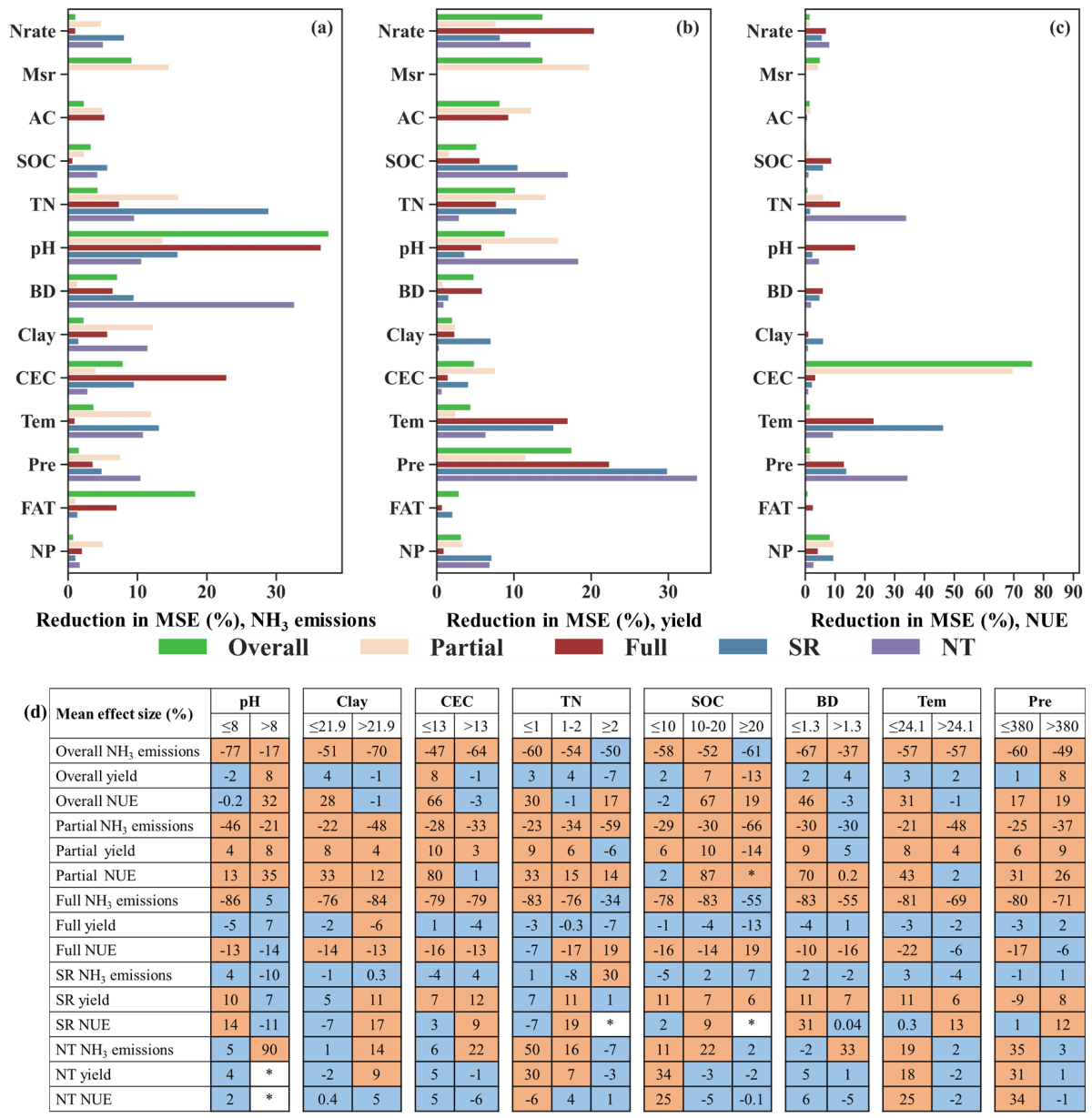
Figure 1. Impacts of organic and conservation agriculture on NH3 emissions, yield, and NUE relative to conventional agriculture
This study found that the effects of OCA depend on soil and climate conditions, and the 40-60% substitution of synthetic fertilizers with livestock manure achieves the maximum co-benefits of enhanced crop production and reduced NH3 emissions. Model forecasts further suggest that the appropriate application of livestock manure, straw return, and no-till could increase grain production up to 59.7 million metric tons (100% of straw return) and reduce a maximum of US$2.7 billion (60% substitution with livestock manure) in damage costs to human health from NH3 emissions by 2030. Their findings provide data-driven pathways and options for achieving multiple sustainable development goals and improving food systems and air quality in China.
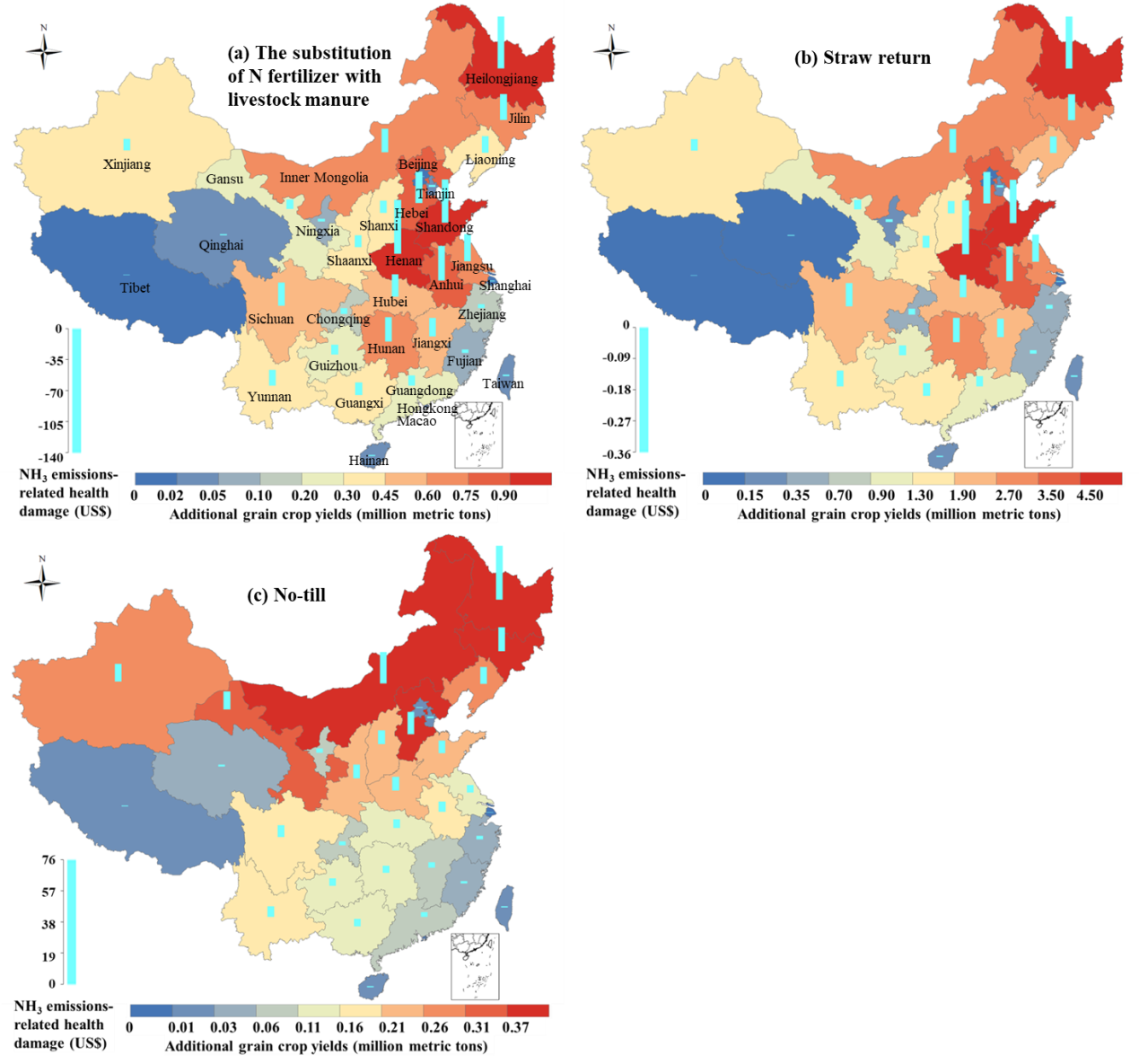
Figure 2. Spatial distributions of the response of the sustainable intensification of agricultural strategies in terms of additional grain yields and NH3 emissions-related health damage in China in 2030
Dr. Peng Xu from the School of ESE at SUSTech is the first author of this paper. Geng Li, a doctoral candidate from the Division of Environment and Sustainability at the Hong Kong University of Science and Technology (HKUST), is the co-first author. Prof. Yi Zheng is the corresponding author. This is an internationally collaborated work that included Dr. Benjamin Z. Houlton, Prof. and Dean of the College of Agriculture and Life Sciences at Cornell University, and Dr. Anping Chen, Research Associate at Colorado State University, who are co-authors of the paper.
This research was supported by the National Natural Science Foundation of China (NSFC), the Strategic Priority Research Program of the Chinese Academy of Sciences, the Guangdong Basic and Applied Basic Research Foundation, the Guangdong University Youth Innovation Talent Project, the Shenzhen Science and Technology Innovation Commission, and the China Postdoctoral Science Foundation.
Paper link: https://pubs.acs.org/doi/full/10.1021/acs.est.1c07518
2026-03-10
2026-09-08
A delegation of 13 students from Southern University of Science and Technology (SUSTech), Zhejiang University and the University of Science and Technology of China (USTC), accompanied by four SUSTech faculty members including including two affiliated with the State Key Laboratory of Soil Pollution Control and Safety, concluded a 12-day summer school at Flinders University in August, 2026, hosted by the University’s National Centre for Groundwater Research and Training (NCGRT).Throughout the program, the students participated in a wide range of educational activities covering water resources, environmental health, groundwater modeling, managed aquifer recharge, salinity management, mining sites management, virtual reality hydrology, and nature-based solutions for surface water, groundwater and soil pollution.A highlight of the visit was a series of field trips showcasing South Australia’s unique natural environments. These included an overnight excursion to a global showcase of integrated surface and groundwater management exemplified by the Murray-Darling Basin. Visits to the St Kilda Mangroves highlighted ecohydrological approaches to coastal mangrove conservation. While Hallett Cove featured the most famous glacial striation on pre-Cambrian rocks. Happy Valley Reservoir, Oaklands Wetland, and Port Willunga Beach, with their wildlife, water management and well-exposed sedimentary rock formations, left strong impressions on our students. Students also attended research seminars and explored Flinders University’s teaching and research facilities.This summer school provided an excellent opportunity for students to engage with Flinders University staff, students, and researchers, experience Australian approaches to soil and groundwater pollution control and safety research, and strengthen the institutional ties between SUSTech and Flinders University, while fostering international connections and cross-cultural learning. The visit was made possible through a combination of support provided by SUSTech and the Fundamental and Interdisciplinary Disciplines Breakthrough Plan of the Ministry of Education of China(JYB2025XDXM909).During the visit, Chair Professor Yan ZHENG from SUSTech delivered a research seminar on arsenic detection in the developed and developing world. Flinders University noted that its academic community was privileged to learn from her expertise.SUSTech expresses its gratitude for the incredible partnership with Flinders University at the conclusion of the program.
2026-04-22
On April 22, the Frontiers Planet Prize announced its list of 25 National Champions for 2026. Hong WANG, a 2025 graduate of the School of Environmental Science and Engineering at the Southern Universi
2026-04-20
On the morning of April 17, 2026, a delegation from Flinders University (Australia), led by Professor Colin Stirling, President of Flinders University, visited the Southern University of Science and T
2026-04-08
Hydrological models are foundational tools for water resource management, agricultural planning, flood and drought mitigation, and ecosystem protection. A long-standing challenge in hydrology is devel
 |