

© 2026 All Rights Reserved. 粤ICP备14051456号
2022-05-20
View:16
Global livestock production is a major source of N2O emissions, accounting for approximately 24-44% of the total global anthropogenic emissions. The consumption of livestock products is projected to increase in response to rising affluence and urbanization, especially in the developing world, which may further accelerate global N2O emissions.
To achieve the Paris Agreement goal of limiting the global temperature increase to well below 1.5 °C above preindustrial levels, mitigating N2O emissions from the livestock sector while meeting the demand for livestock products is urgently required. China is the world’s largest emitter of nitrous oxide (N2O), with significant amounts of this potent greenhouse gas traced to the nation’s livestock production. Therefore, mitigating livestock-N2O emissions could contribute substantially to the nation’s 2060 carbon neutrality target. To date, few studies have integrated assessed historical drivers and future reduction potential of the livestock-N2O emissions in China at the country level.
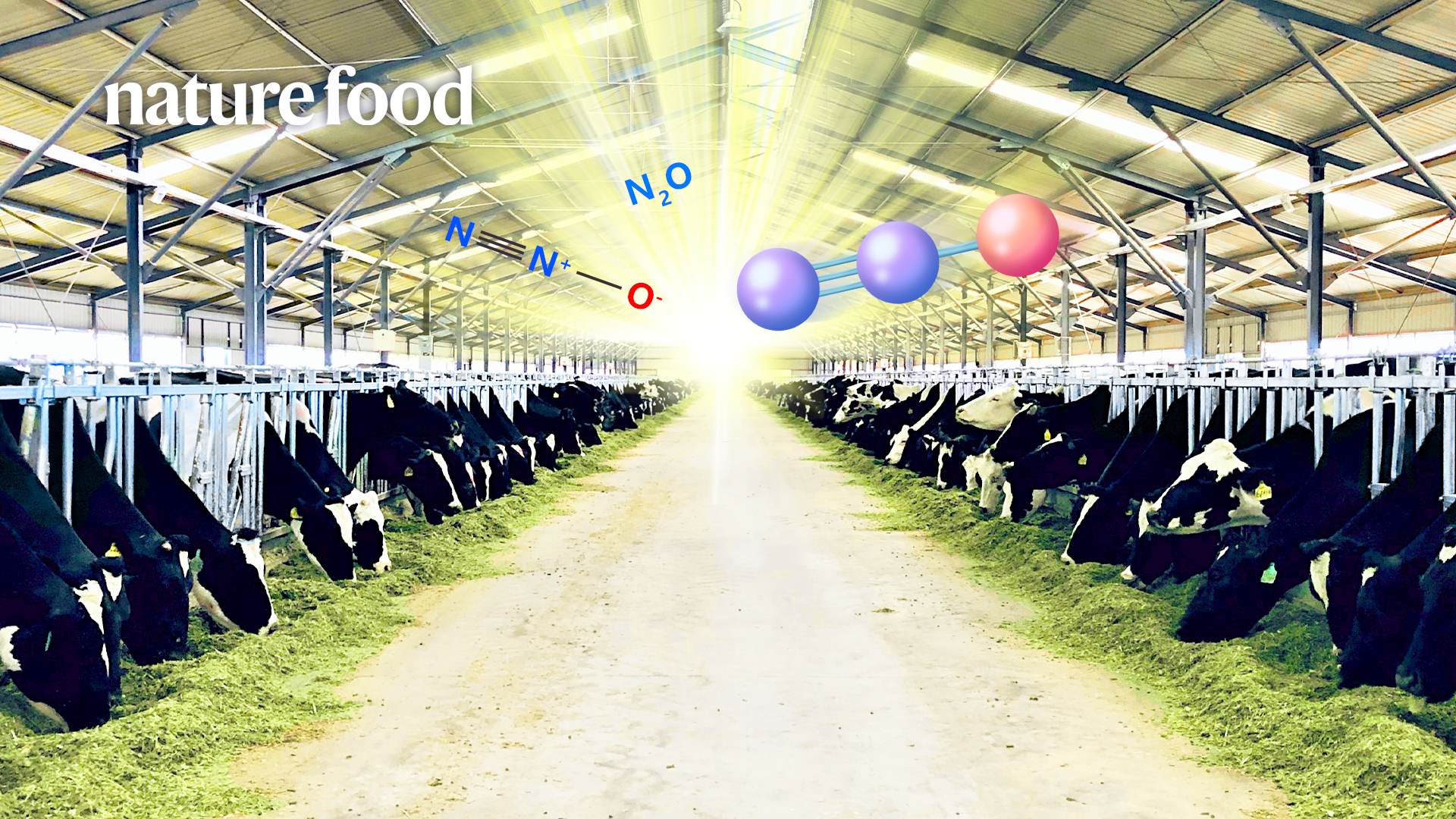
Scholars from the School of Environmental Science and Engineering (ESE) at the Southern University of Science and Technology (SUSTech) recently revealed the slowdown of nitrous oxide emissions from livestock production in China from 1978-2017.
Their research, entitled “Policy-enabled stabilization of nitrous oxide emissions from livestock production in China over 1978-2017,” was published in Nature Food, an online journal publishing top-tier food-related research in the natural, applied, and social sciences.
In this study, the researchers developed a new N2O emission inventory for China’s livestock production, including a gridded map for 2017 at 1 km resolution, based on activity data of high spatial resolution. They quantified the contributions of socioeconomic drivers to China’s livestock-N2O emissions, including population, dietary choice, urbanization, industrial production system, and other factors (e.g., policy interventions and technological adoption). They explored future mitigation pathways from livestock production in China through 2030.
This study found that the total N2O emissions (Etotal) increased from 105.8 Gg N2O in 1978 to 408.7 Gg N2O in 2017 (Figure 1), with an average annual growth rate of 3.7%. Etotal increased at an average annual rate of 5.2% per year from 1978-1996, 3.6% per year from 1997-2006, and 1.1% per year from 2007-2017, showing an obvious trend of stabilization.
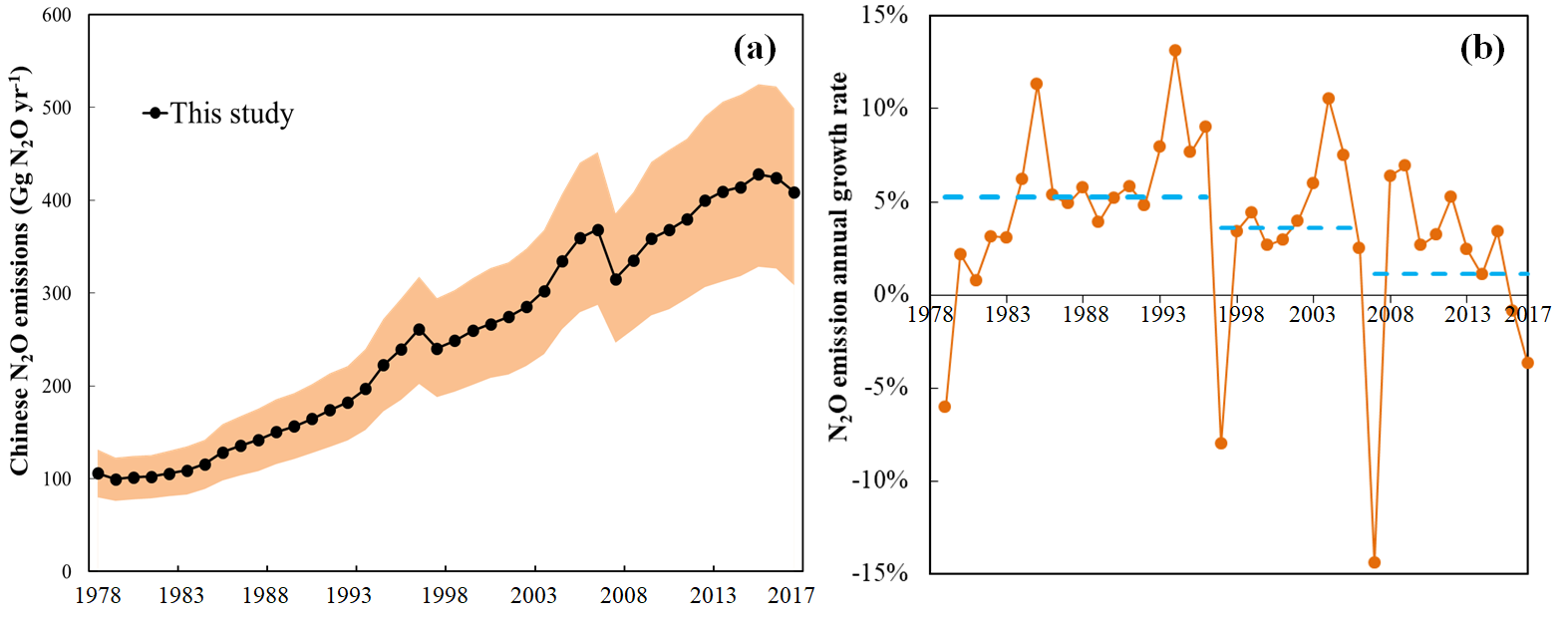
Figure 1. Trend of N2O emissions
In the study period, population growth was the most important driver of the change in annual N2O emissions, followed by the expansion of industrial production systems (Figure 2). In the last two stages, other factors, including policy interventions and actual technological adoption, significantly buffered the increase in N2O emissions, offsetting 11.6% and 15.2% of the potential increments in 1996-2006 and 2007-2017, respectively, which explains the recent stabilization of N2O emissions.
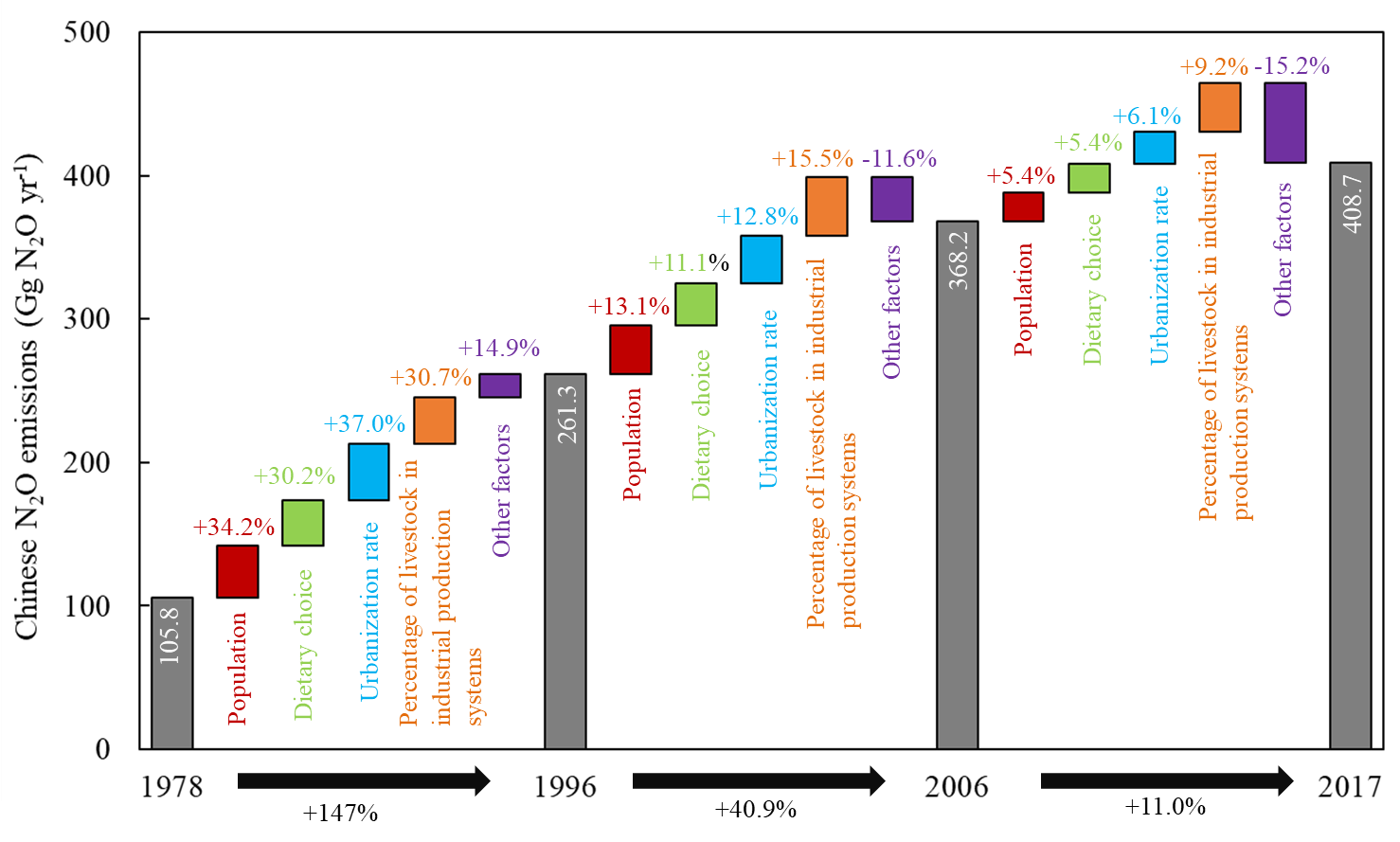
Figure 2. Contribution of each driver to the change in N2O emissions in the periods 1978-1996, 1996-2006, and 2006-2017 for China
The study also investigated future pathways for reducing the livestock-N2O emissions by promoting the adaptation of emission-reduction technologies. At the national scale, anaerobic digestion was found to produce the highest social benefits, while low crude protein feed was the most cost-effective. The greatest reduction potential would be achieved by promoting a combination of anaerobic digestion with composting. At the farmer scale, the technology selection would be largely region-dependent, conditioned on a variety of natural and socioeconomic factors. Good planning and policy guidance from the government is therefore imperative.
The findings of this study offer a scientific basis for China’s policy formulation for livestock production, environmental protection, and greenhouse gas emission reduction, as well as critical data to support the global effort of coping with climate change.
Dr. Peng Xu from the School of ESE at SUSTech is the first author of this paper. Prof. Yi Zheng is the corresponding author. This is an internationally collaborated work that included Dr. Benjamin Z. Houlton, Dean of the College of Agriculture and Life Sciences at Cornell University, and Dr. Anping Chen, Research Associate at Colorado State University, who are co-authors of the paper.
This research was supported by the Strategic Priority Research Program of the Chinese Academy of Sciences, the National Natural Science Foundation of China (NSFC), the California Strategic Growth Council Climate Change Research Program, and the U.S. Department of Energy (DOE).
Paper link: https://www.nature.com/articles/s43016-022-00513-y
2026-03-10
2026-09-08
A delegation of 13 students from Southern University of Science and Technology (SUSTech), Zhejiang University and the University of Science and Technology of China (USTC), accompanied by four SUSTech faculty members including including two affiliated with the State Key Laboratory of Soil Pollution Control and Safety, concluded a 12-day summer school at Flinders University in August, 2026, hosted by the University’s National Centre for Groundwater Research and Training (NCGRT).Throughout the program, the students participated in a wide range of educational activities covering water resources, environmental health, groundwater modeling, managed aquifer recharge, salinity management, mining sites management, virtual reality hydrology, and nature-based solutions for surface water, groundwater and soil pollution.A highlight of the visit was a series of field trips showcasing South Australia’s unique natural environments. These included an overnight excursion to a global showcase of integrated surface and groundwater management exemplified by the Murray-Darling Basin. Visits to the St Kilda Mangroves highlighted ecohydrological approaches to coastal mangrove conservation. While Hallett Cove featured the most famous glacial striation on pre-Cambrian rocks. Happy Valley Reservoir, Oaklands Wetland, and Port Willunga Beach, with their wildlife, water management and well-exposed sedimentary rock formations, left strong impressions on our students. Students also attended research seminars and explored Flinders University’s teaching and research facilities.This summer school provided an excellent opportunity for students to engage with Flinders University staff, students, and researchers, experience Australian approaches to soil and groundwater pollution control and safety research, and strengthen the institutional ties between SUSTech and Flinders University, while fostering international connections and cross-cultural learning. The visit was made possible through a combination of support provided by SUSTech and the Fundamental and Interdisciplinary Disciplines Breakthrough Plan of the Ministry of Education of China(JYB2025XDXM909).During the visit, Chair Professor Yan ZHENG from SUSTech delivered a research seminar on arsenic detection in the developed and developing world. Flinders University noted that its academic community was privileged to learn from her expertise.SUSTech expresses its gratitude for the incredible partnership with Flinders University at the conclusion of the program.
2026-04-22
On April 22, the Frontiers Planet Prize announced its list of 25 National Champions for 2026. Hong WANG, a 2025 graduate of the School of Environmental Science and Engineering at the Southern Universi
2026-04-20
On the morning of April 17, 2026, a delegation from Flinders University (Australia), led by Professor Colin Stirling, President of Flinders University, visited the Southern University of Science and T
2026-04-08
Hydrological models are foundational tools for water resource management, agricultural planning, flood and drought mitigation, and ecosystem protection. A long-standing challenge in hydrology is devel
 |