

© 2026 All Rights Reserved. 粤ICP备14051456号
2022-07-08
View:14
Excessive riverine export of nitrogen caused by human activities poses huge threats to water security in coastal areas and marine ecosystems. Reducing the global nitrogen flux into oceans becomes an urgent front-burner issue in sustaining the Earth’s system within its safe operating space for humanity.
Given the current state of technology, long-term high-frequency monitoring of riverine nitrogen remains costly and applicable only for a small number of rivers worldwide. On the other hand, existing models, either process-based or empirical, are usually deficient in applicability beyond where they were built. Therefore, a coherent view of the daily dynamics of global riverine nitrogen export is still missing.

Professor Yi Zheng’s research team from the School of Environmental Science and Engineering at the Southern University of Science and Technology (SUSTech) have recently made advances in artificial intelligence (AI) technology to provide a reliable understanding of riverine nitrogen.
Their study, entitled “Predicting Dynamic Riverine Nitrogen Export in Unmonitored Watersheds: Leveraging Insights of AI from Data-Rich Regions,” was published in Environmental Science & Technology, a top journal in the field of environmental science.
Deep learning (DL), the cutting-edge AI technology, has achieved remarkable success in hydrology modeling, and has recently started to be employed for water quality modeling. Most of the existing DL models of water quality do not explicitly account for basin-scale driving forces (e.g., hydrometeorological drivers and human activities) or static basin properties (e.g., land use and soil attributes), and therefore have limited transferability. The black-box nature of DL models also leads to the question of explainability. The potential of DL in water environment studies is yet to be exploited.
This study developed a DL-based approach to model the daily dynamic riverine export of dissolved inorganic nitrogen (DIN) in the North River watershed (NRW), a major subbasin of the Jiulong River watershed in Fujian Province, China (Figure 1).
The DL models of DIN concentration and flux were built using the long short-term memory (LSTM) neural network, with hydrometeorological data and nitrogen sources (i.e., fertilizer application and livestock breeding) as inputs. The DL models exhibited excellent accuracy for both DIN concentration and flux, with Nash-Sutcliffe efficiency coefficients (NSEs) up to 0.67 and 0.92, respectively, a performance unlikely to be achieved by generic process-based models with comparable data quality.
DL interpretation demonstrated that the LSTM-based models are able to reproduce the watershed processes regarding nitrogen transport, and such good explainability may be attributed to the unique architecture of LSTM.
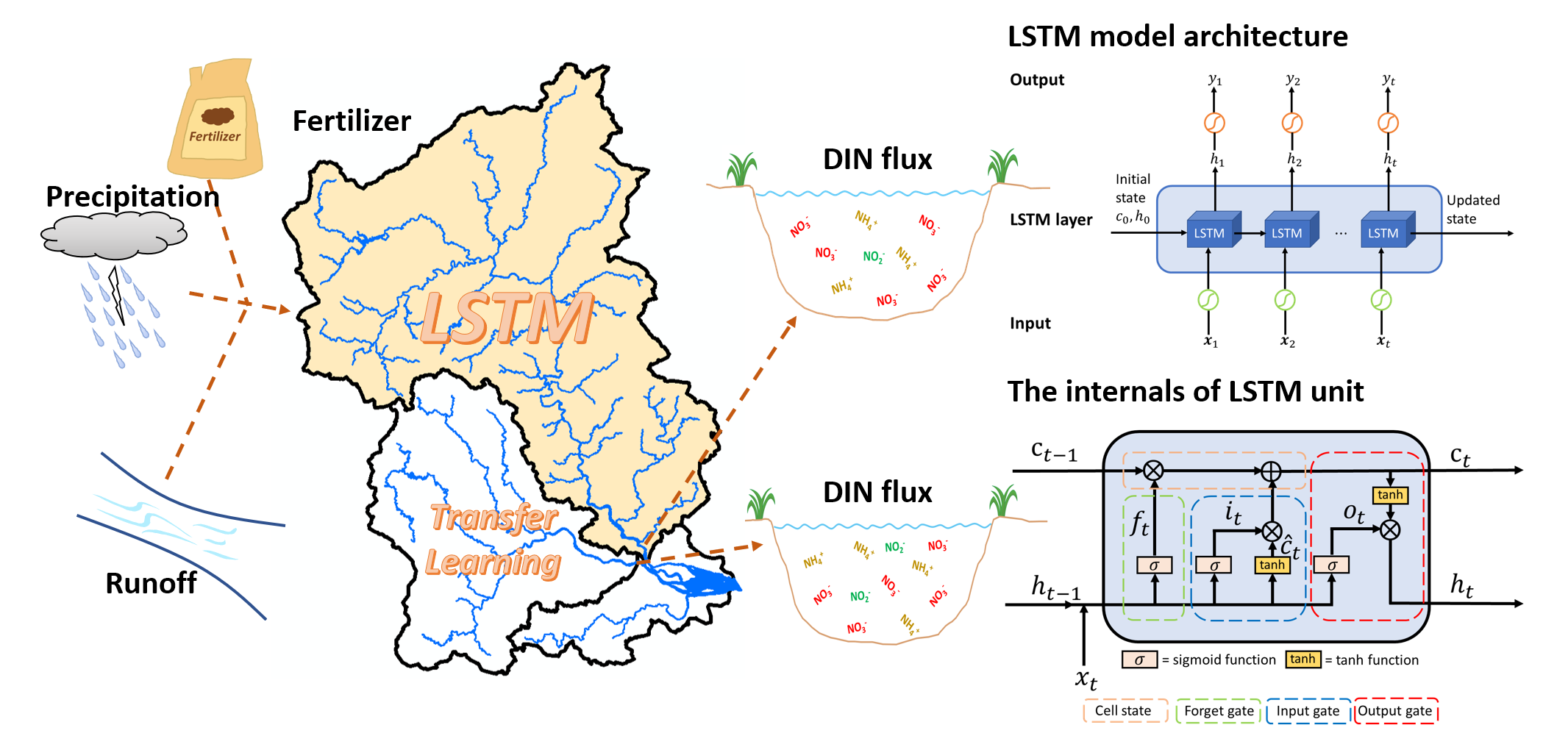
Figure 1. LSTM-based deep learning models
The DL models built in the NRW were further applied without retraining at seven distinct watersheds across Asia, Europe, and North America to test their transferability (Figure 2). These seven watersheds are significantly different in size, climate, and geographic and socioeconomic conditions.
Except in the Newport Bay Watershed (NPB) in the United States (mean NSE=0.32), the flux models performed well in the other six watersheds (mean NSE = 0.55-0.84), which demonstrates the existence of interbasin consistency regarding riverine nitrogen export across different continents.
The researchers’ further analysis indicated that such interbasin consistency stems from the similarities in rainfall-runoff relationships. An additional experiment showed that training a uniform flux model with data from multiple watersheds can further improve the model transferability.
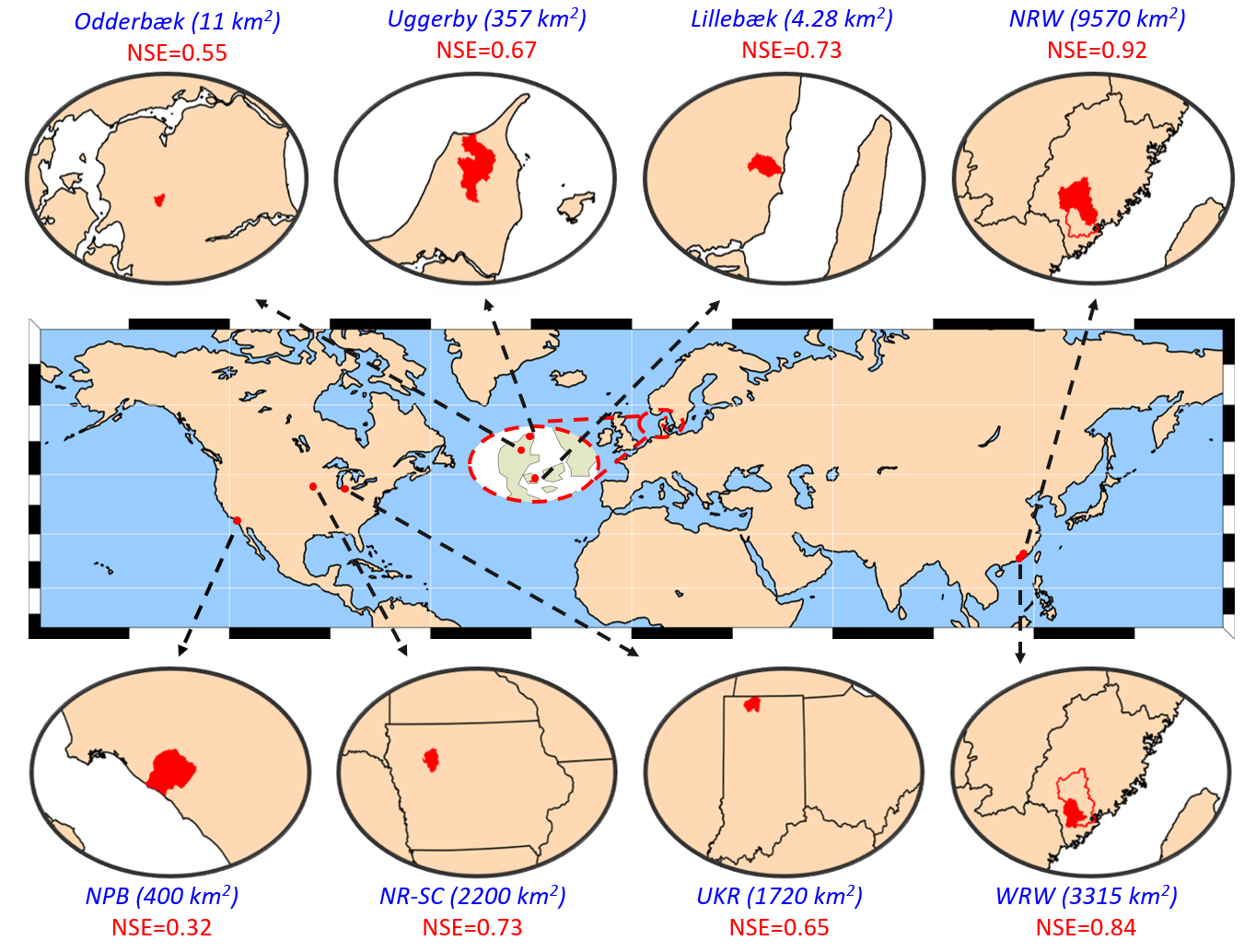
Figure 2. Transfer learning across different continents
This study demonstrates the great power of explainable AI in water environment modeling. It provides a potential shortcut to a consistent understanding of the global daily-resolution dynamics of riverine nitrogen export under the currently limited data conditions, which is significant for global water resources management.
Rui Xiong, a Ph.D. candidate under the joint Ph.D. program of SUSTech and the Hong Kong University of Science and Technology (HKUST), is the first author of this paper. Prof. Yi Zheng is the corresponding author. Other co-authors include Prof. Mengqian Lu (co-supervisor) from HKUST, Prof. Nengwang Chen from Xiamen University, and Prof. Yan Zheng from SUSTech.
The work was supported by the National Natural Science Foundation of China (NSFC) and the Shenzhen Science and Technology Innovations Commission.
Paper link: https://pubs.acs.org/doi/10.1021/acs.est.2c02232
2026-03-10
2026-09-08
A delegation of 13 students from Southern University of Science and Technology (SUSTech), Zhejiang University and the University of Science and Technology of China (USTC), accompanied by four SUSTech faculty members including including two affiliated with the State Key Laboratory of Soil Pollution Control and Safety, concluded a 12-day summer school at Flinders University in August, 2026, hosted by the University’s National Centre for Groundwater Research and Training (NCGRT).Throughout the program, the students participated in a wide range of educational activities covering water resources, environmental health, groundwater modeling, managed aquifer recharge, salinity management, mining sites management, virtual reality hydrology, and nature-based solutions for surface water, groundwater and soil pollution.A highlight of the visit was a series of field trips showcasing South Australia’s unique natural environments. These included an overnight excursion to a global showcase of integrated surface and groundwater management exemplified by the Murray-Darling Basin. Visits to the St Kilda Mangroves highlighted ecohydrological approaches to coastal mangrove conservation. While Hallett Cove featured the most famous glacial striation on pre-Cambrian rocks. Happy Valley Reservoir, Oaklands Wetland, and Port Willunga Beach, with their wildlife, water management and well-exposed sedimentary rock formations, left strong impressions on our students. Students also attended research seminars and explored Flinders University’s teaching and research facilities.This summer school provided an excellent opportunity for students to engage with Flinders University staff, students, and researchers, experience Australian approaches to soil and groundwater pollution control and safety research, and strengthen the institutional ties between SUSTech and Flinders University, while fostering international connections and cross-cultural learning. The visit was made possible through a combination of support provided by SUSTech and the Fundamental and Interdisciplinary Disciplines Breakthrough Plan of the Ministry of Education of China(JYB2025XDXM909).During the visit, Chair Professor Yan ZHENG from SUSTech delivered a research seminar on arsenic detection in the developed and developing world. Flinders University noted that its academic community was privileged to learn from her expertise.SUSTech expresses its gratitude for the incredible partnership with Flinders University at the conclusion of the program.
2026-04-22
On April 22, the Frontiers Planet Prize announced its list of 25 National Champions for 2026. Hong WANG, a 2025 graduate of the School of Environmental Science and Engineering at the Southern Universi
2026-04-20
On the morning of April 17, 2026, a delegation from Flinders University (Australia), led by Professor Colin Stirling, President of Flinders University, visited the Southern University of Science and T
2026-04-08
Hydrological models are foundational tools for water resource management, agricultural planning, flood and drought mitigation, and ecosystem protection. A long-standing challenge in hydrology is devel
 |