

© 2026 All Rights Reserved. 粤ICP备14051456号
2023-03-17
View:31
Growing global energy use and the adoption of sustainability goals to limit carbon emissions from fossil fuel burning are increasing the demand for clean energy, including solar. Floating photovoltaic (FPV) systems on reservoirs are advantageous over traditional ground-mounted solar systems in terms of land conservation, efficiency improvement, and water loss reduction.
The key advantages of FPV systems installed on existing reservoirs are that they preserve land for other uses, and most reservoirs tend to be located in proximity to existing grid systems. Furthermore, the cooling effect of water in some installations enhances energy conversion efficiencies, and FPV panels/floats reduce reservoir water losses from evaporation by blocking radiative energy and lowering water temperatures. As large-scale renewable energy application is still in its infancy in most of the world, accurate estimates of the global technical potential of FPV are needed to frame discussions on its potential role within diversified energy portfolios as countries strive to decarbonize.
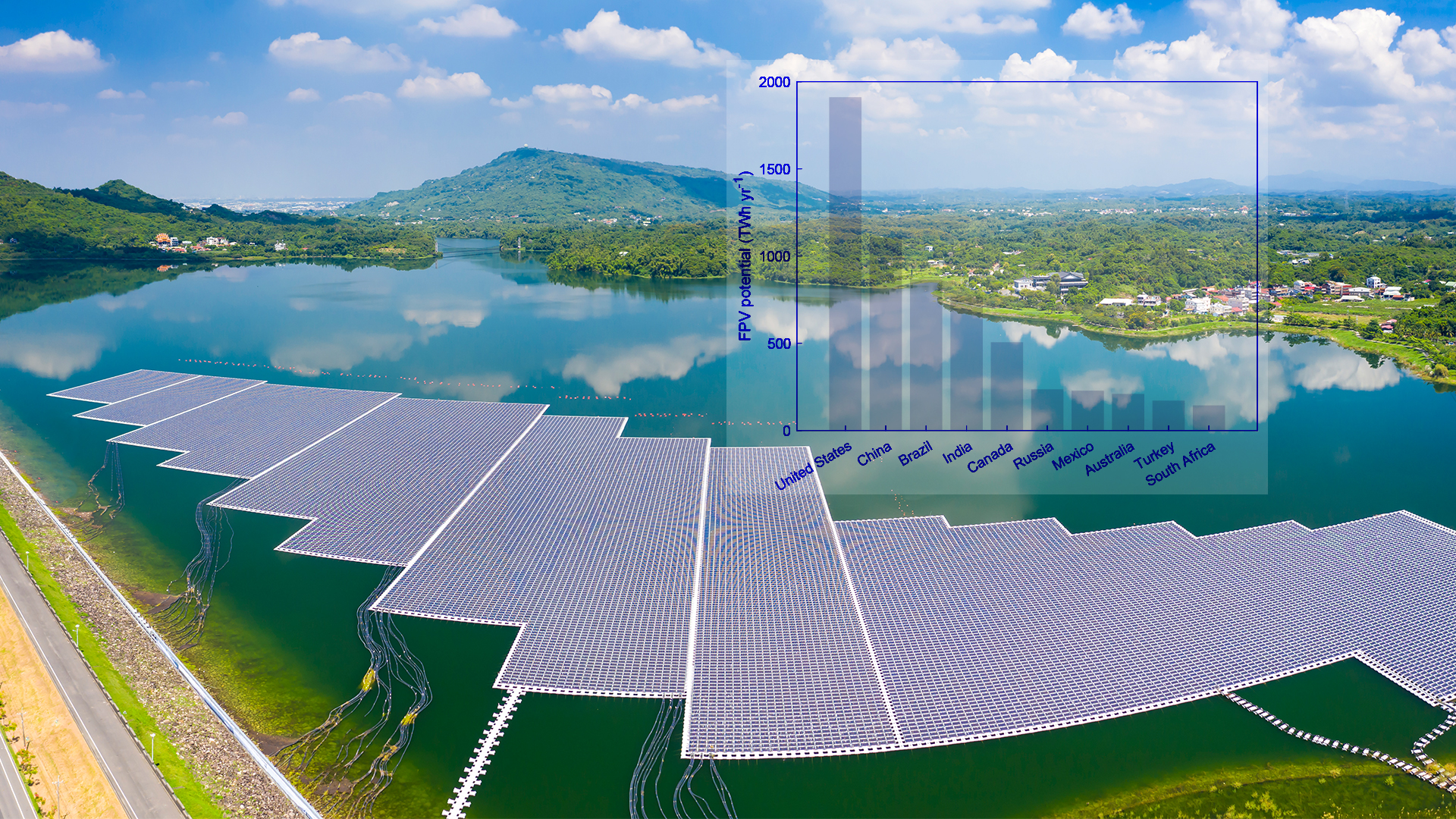
Based on multiple reservoir databases and a realistic climate-driven photovoltaic system simulation, Associate Professor Zhenzhong Zeng’s research team from the School of Environmental Science and Engineering at the Southern University of Science and Technology (SUSTech) recently estimated that the technical potential electricity generation for FPV systems with a 30% coverage on 114,555 global reservoirs is 9,434 ± 29 TWh yr-1.
Also beneficial to FPV worldwide is that the reduced annual evaporation could conserve 106 ± 1 km3 of water, almost the average amount of water 300 million people uses annually. FPV systems on reservoirs could potentially be utilized to improve water and energy security as a part of achieving sustainable development goals.
Their study, entitled “Energy production and water savings from floating solar photovoltaics on global reservoirs,” has been published in Nature Sustainability.
The researchers took advantage of recent advances in the compilation of data on existing reservoirs worldwide and a reliable climate-driven PV system performance model to assess with fine precision the annual generation potential for FPV ranging from 4,300 to 11,000 TWh under different coverages on a global scale. Under the assumption of 30% coverage and not exceeding 30 km2, the United States, with more than 25,000 reservoirs, has the largest FPV potential (1,911 ± 18 TWh yr-1), which per unit area is 177 ± 2 kWh m-2 yr-1. China, which leads the world in total FPV installed capacity, ranks second with 1,107 ± 17 TWh of annual electricity generation potential on 15,616 reservoirs.
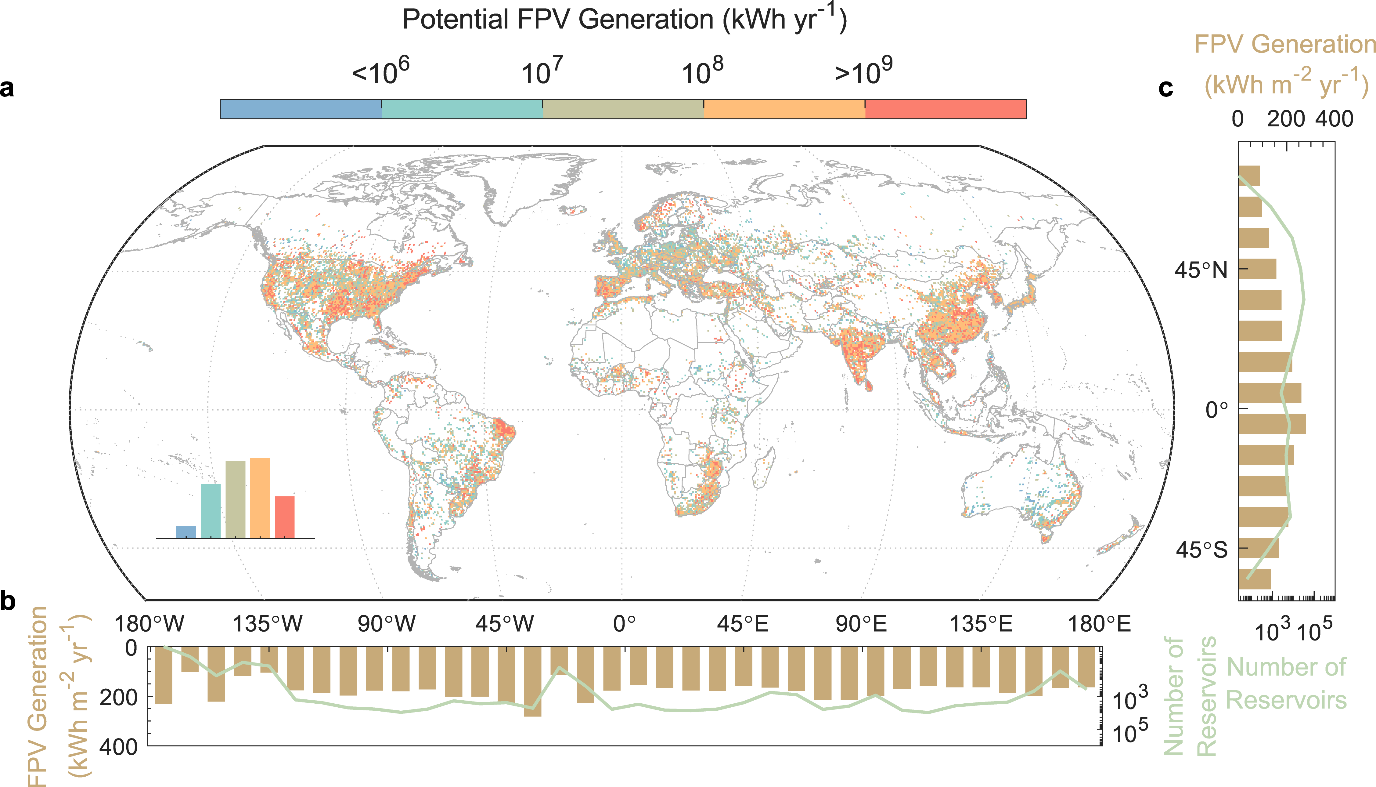
Figure 1. Global potential for annual floating photovoltaic (FPV) generation with 30% reservoir coverage (not exceeding 30 km2).
One of the benefits of FPV is the tendency of resources to be close to centers of high electricity consumption. Thus, FPV would be appropriate for cities/communities with a desire to generate their own electricity through dedicated systems to compete with large power providers and stimulate local economies. Moreover, isolated power systems such as microgrids based on FPV could provide resilient, local, and affordable power in remote areas where grid infrastructure is deficient. The researchers found that 6,256 cities in 124 countries, including 154 metropolises, could, in theory, be powered entirely by local, dedicated FPV plants assuming that adequate energy storage facilities can be developed in tandem.
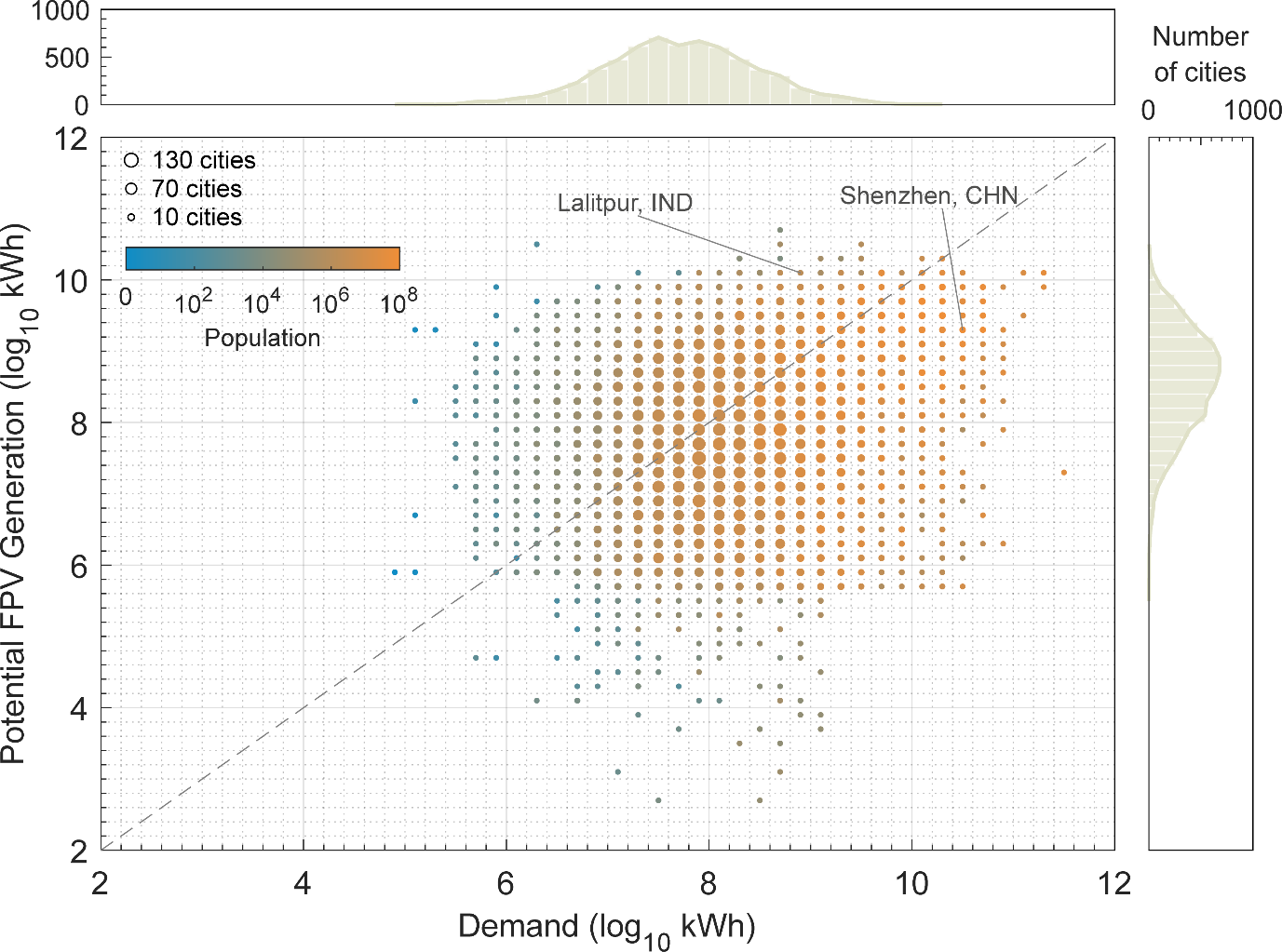
Figure 2. Comparison of floating photovoltaic (FPV) generation potential and electricity demand in cities with 30% reservoir coverage (not exceeding 30 km2).
Regarding water body evaporative losses, Prof. Zeng’s team estimated that FPV systems with 30% coverage could reduce evaporation by 46 ± 3% per reservoir. On the assumption that the floats below the FPV modules cover the surface entirely, water evaporation under an FPV installation approaches zero and evaporation on the surrounding uncovered water surface is also reduced because of the changes to reservoir energy balance variables. They estimate the evaporation loss reduction worldwide is equivalent to 106 ± 1 km3 per year, which is close to that used by 300 million people annually.
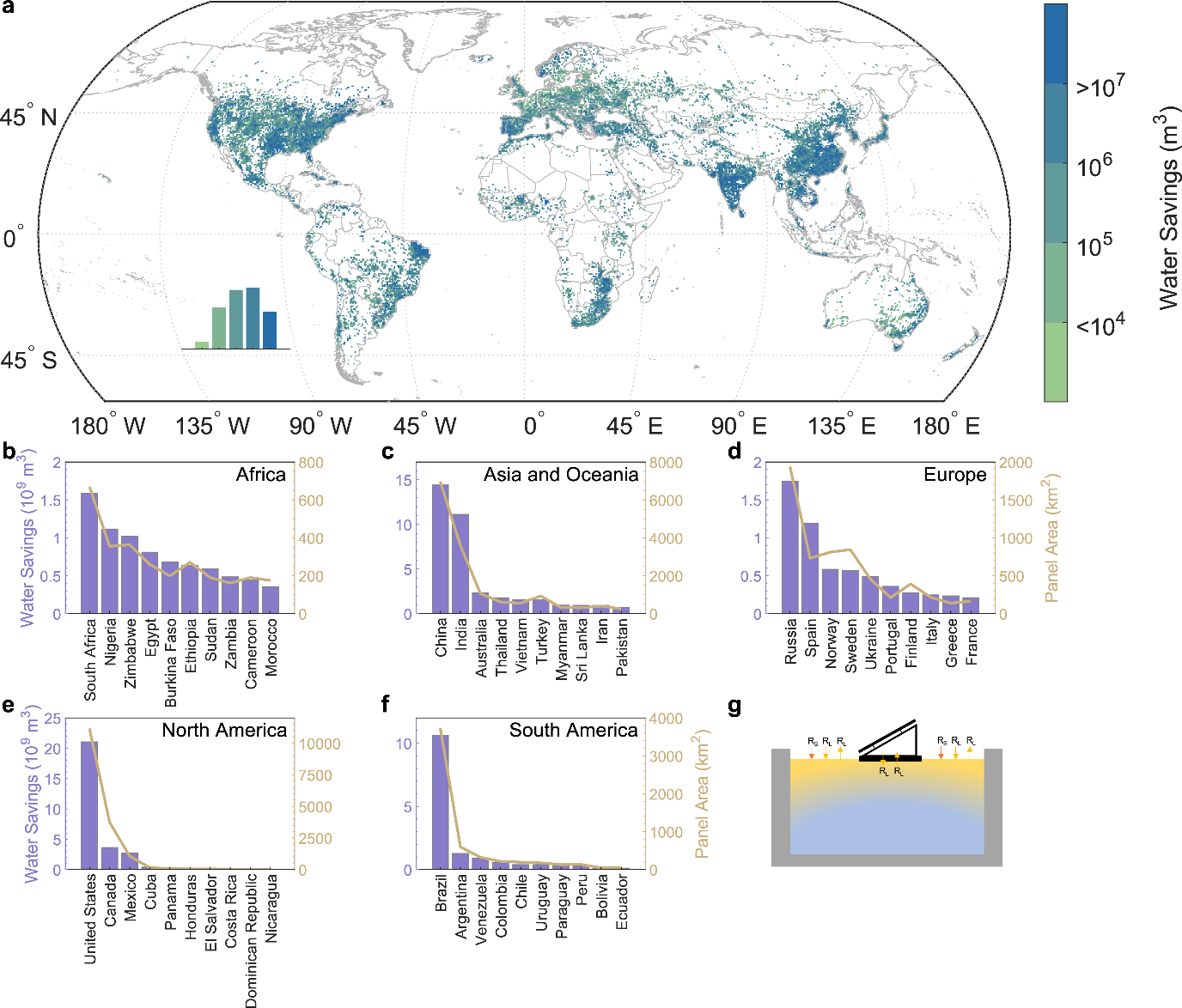
Figure 3. Estimated global water savings from floating photovoltaic (FPV) development with 30% reservoir coverage (not exceeding 30 km2).
Yubin Jin, a master’s student from the School of Environmental Science and Engineering at SUSTech, is the first author of this paper. Assoc. Prof. Zhenzhong Zeng is the corresponding author. Other affiliations that contributed to this work include ETH Zurich, Mae Jo University, University of California, Santa Cruz (UCSC), University of Gothenburg, University of Michigan, and MingYang Smart Energy.
This study was supported by the National Natural Science Foundation of China (NSFC) and the Start-Up Fund provided by SUSTech.
Paper link: https://www.nature.com/articles/s41893-023-01089-6
2026-03-10
2026-09-08
A delegation of 13 students from Southern University of Science and Technology (SUSTech), Zhejiang University and the University of Science and Technology of China (USTC), accompanied by four SUSTech faculty members including including two affiliated with the State Key Laboratory of Soil Pollution Control and Safety, concluded a 12-day summer school at Flinders University in August, 2026, hosted by the University’s National Centre for Groundwater Research and Training (NCGRT).Throughout the program, the students participated in a wide range of educational activities covering water resources, environmental health, groundwater modeling, managed aquifer recharge, salinity management, mining sites management, virtual reality hydrology, and nature-based solutions for surface water, groundwater and soil pollution.A highlight of the visit was a series of field trips showcasing South Australia’s unique natural environments. These included an overnight excursion to a global showcase of integrated surface and groundwater management exemplified by the Murray-Darling Basin. Visits to the St Kilda Mangroves highlighted ecohydrological approaches to coastal mangrove conservation. While Hallett Cove featured the most famous glacial striation on pre-Cambrian rocks. Happy Valley Reservoir, Oaklands Wetland, and Port Willunga Beach, with their wildlife, water management and well-exposed sedimentary rock formations, left strong impressions on our students. Students also attended research seminars and explored Flinders University’s teaching and research facilities.This summer school provided an excellent opportunity for students to engage with Flinders University staff, students, and researchers, experience Australian approaches to soil and groundwater pollution control and safety research, and strengthen the institutional ties between SUSTech and Flinders University, while fostering international connections and cross-cultural learning. The visit was made possible through a combination of support provided by SUSTech and the Fundamental and Interdisciplinary Disciplines Breakthrough Plan of the Ministry of Education of China(JYB2025XDXM909).During the visit, Chair Professor Yan ZHENG from SUSTech delivered a research seminar on arsenic detection in the developed and developing world. Flinders University noted that its academic community was privileged to learn from her expertise.SUSTech expresses its gratitude for the incredible partnership with Flinders University at the conclusion of the program.
2026-04-22
On April 22, the Frontiers Planet Prize announced its list of 25 National Champions for 2026. Hong WANG, a 2025 graduate of the School of Environmental Science and Engineering at the Southern Universi
2026-04-20
On the morning of April 17, 2026, a delegation from Flinders University (Australia), led by Professor Colin Stirling, President of Flinders University, visited the Southern University of Science and T
2026-04-08
Hydrological models are foundational tools for water resource management, agricultural planning, flood and drought mitigation, and ecosystem protection. A long-standing challenge in hydrology is devel
 |