

© 2026 All Rights Reserved. 粤ICP备14051456号
2026-01-07
View:33
Researchers develop a spatially decoupled electrochemical strategy for lime passivation prevention and sustainable phosphate recovery
School of Environmental Science and Engineering | 01/07/2026
A research team, led by Assistant Professor Yang LEI, in the School of Environmental Science and Engineering at Southern University of Science and Technology (SUSTech), has revealed the mechanism behind surface passivation in conventional lime-based precipitation and proposed an innovative spatially decoupled electrochemical technique to overcome lime passivation and achieve efficient phosphorus (P) recovery. The paper with their findings, entitled “Spatially decoupled electrochemical strategy for lime passivation prevention and sustainable phosphate recovery,” has been published in Nature Communications.

Lime-based precipitation, though widely adopted for wastewater P removal, suffers from surface passivation. The passivation layer inhibits Ca2+ release, forcing excessive dosing while yielding low-quality sludge and effluent with elevated hardness and pH. Surface passivation, a universal challenge prevalent in environmental geochemical systems, is plaguing processes reliant on solid-liquid reactions such as acidic mine drainage remediation, zero-valent iron corrosion, and enhanced rock weathering. Thus, understanding passivation mechanisms and developing practical mitigation strategies are essential for advancing efficient and sustainable environmental remediation processes.
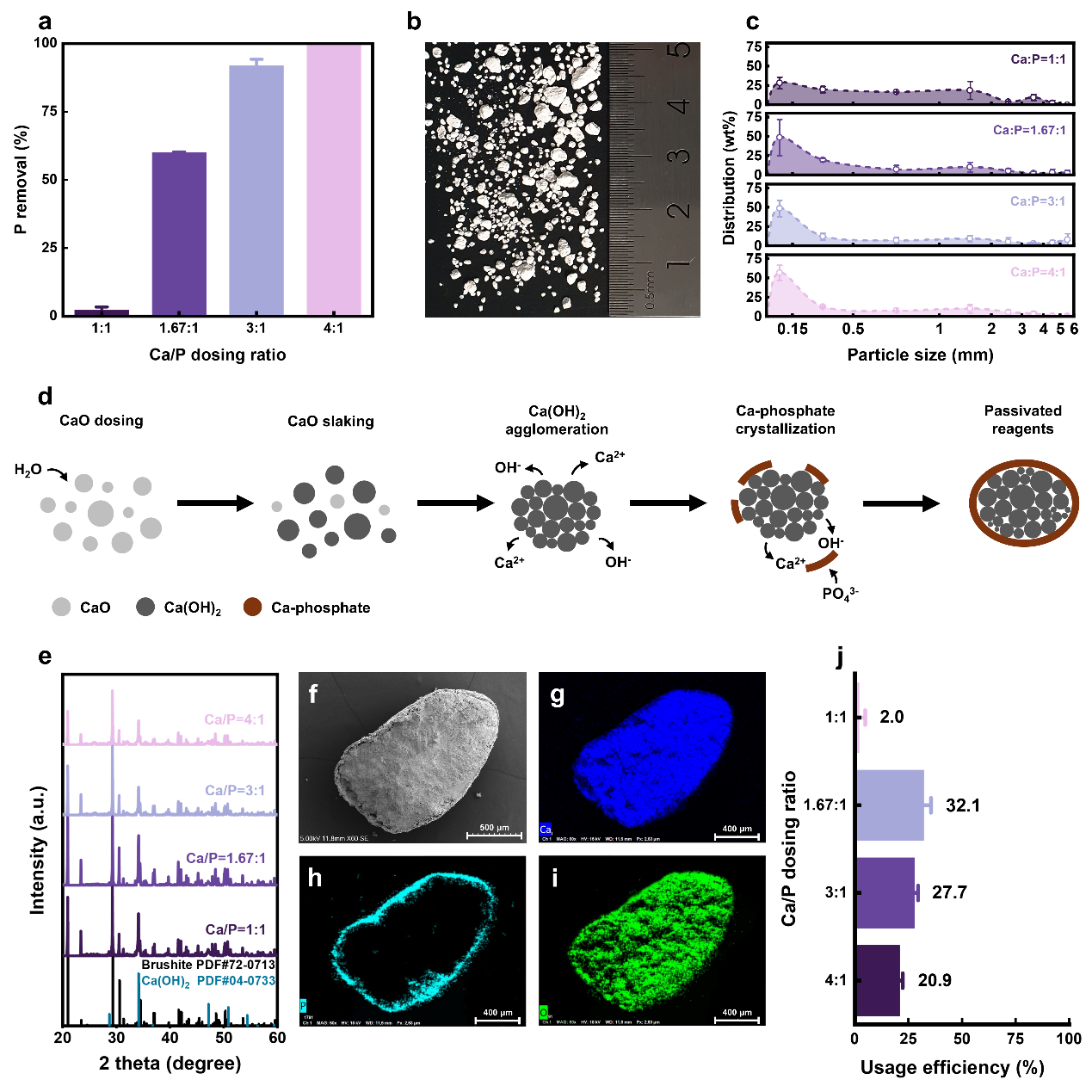
Fig. 1: Lime surface passivation and mechanism illustration
The team found that the substantial heat brought by lime hydration dramatically decreases Ca(OH)₂ solubility, promoting rapid Ca(OH)2 agglomeration. In wastewater, Ca²⁺ and OH⁻ was released from these agglomerates and combine with phosphates, forming a dense Ca-phosphate passivation layer on the particle surface, inhibiting further Ca2+ release and P removal (Fig. 1). The lime passivation, inversely governed by Ca(OH)2 solubility, necessitates substantial over-dosing (up to Ca/P ratio of 4:1) (Fig.1), ultimately yielding low-purity products (<6.9wt% P) and poor effluent quality (936.7mg L–1 Ca2+ and pH 12.7). While limestone presents an economically and environmentally favorable alternative, its efficacy remains critically limited (0.3–11.0% at Ca/P 1:1–4:1) due to rapid Ca-phosphate redissolution, underscoring the importance of stable alkalinity.
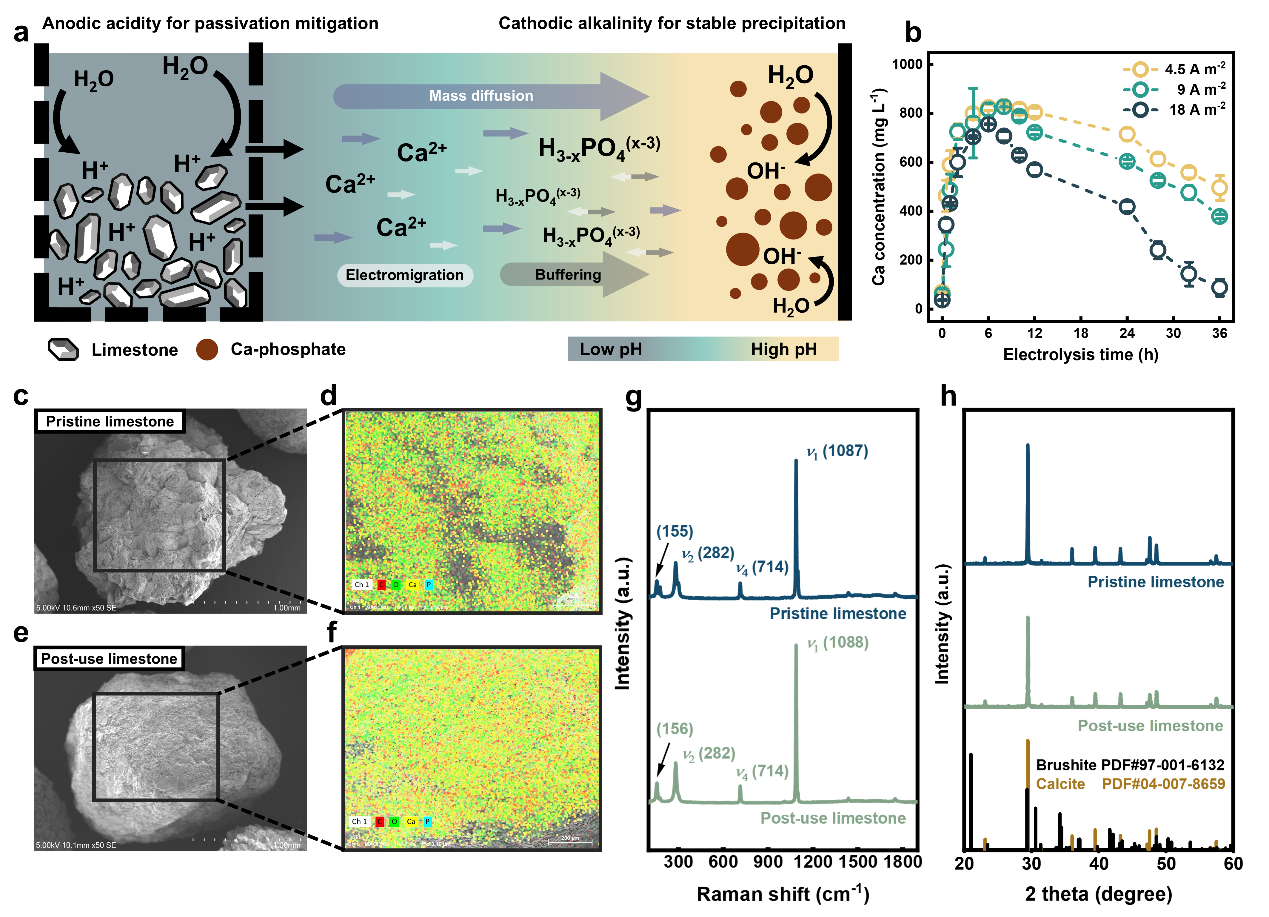
Fig. 2: Spatially decoupled electrochemical strategy tackling surface passivation and securing Ca2+ supply
The core challenge, whether in lime passivation or limestone precipitate redissolution, lies in the inseparable coupling of two key reactions within the same region: Ca2+ release (requiring acidity) and phosphate precipitation (requiring alkalinity).
Leveraging water electrolysis, the team developed an electrochemical strategy that spatially decouples the Ca2+ release and phosphate precipitation. By strategically positioning limestone in the acidic anode zone, sustained anti-passivation and efficient Ca2+ release were secured (Fig. 2). In the alkaline cathode zone, in situ-generated alkalinity drives Ca-phosphate precipitation, enabling efficient P recovery (85.7%). The system produces high-purity products (15.2 wt% P) at low energy consumption (14.8 kWh kg P-1) and delivers superior effluent quality (Fig. 3).
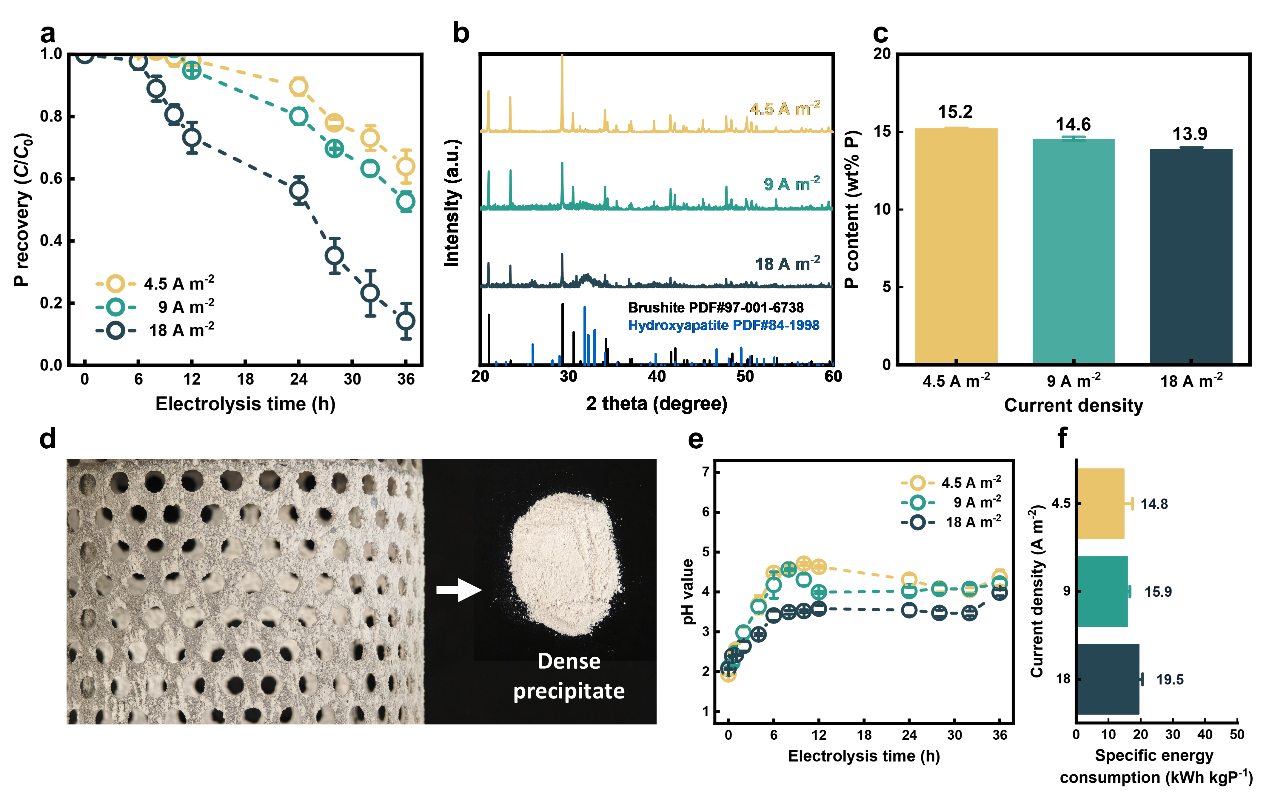
Fig. 3: The performance of the spatially decoupled electrochemical strategy in enhanced P recovery
Building upon mechanistic insights, the spatially decoupled electrochemical strategy demonstrates robustness and capacity flexibility over long-term operation, underscoring its implementation potential. The Techno-Economic Analysis (TEA) and Life Cycle Assessment (LCA) show that the electrochemical strategy can achieve 73.2% cost savings and a 29.1% reduction in carbon emissions by overcoming the inherent limitations of routine lime precipitation.
Ph.D. student Zhengshuo ZHAN and M.S. student Jingwen LV from the School of Environmental Science and Engineering are co-first authors of the paper. Assistant Professor Yang LEI is the corresponding author, with SUSTech serving as the first corresponding institution.
Paper Link: https://www.nature.com/articles/s41467-025-67911-1
2026-03-10
2026-09-08
A delegation of 13 students from Southern University of Science and Technology (SUSTech), Zhejiang University and the University of Science and Technology of China (USTC), accompanied by four SUSTech faculty members including including two affiliated with the State Key Laboratory of Soil Pollution Control and Safety, concluded a 12-day summer school at Flinders University in August, 2026, hosted by the University’s National Centre for Groundwater Research and Training (NCGRT).Throughout the program, the students participated in a wide range of educational activities covering water resources, environmental health, groundwater modeling, managed aquifer recharge, salinity management, mining sites management, virtual reality hydrology, and nature-based solutions for surface water, groundwater and soil pollution.A highlight of the visit was a series of field trips showcasing South Australia’s unique natural environments. These included an overnight excursion to a global showcase of integrated surface and groundwater management exemplified by the Murray-Darling Basin. Visits to the St Kilda Mangroves highlighted ecohydrological approaches to coastal mangrove conservation. While Hallett Cove featured the most famous glacial striation on pre-Cambrian rocks. Happy Valley Reservoir, Oaklands Wetland, and Port Willunga Beach, with their wildlife, water management and well-exposed sedimentary rock formations, left strong impressions on our students. Students also attended research seminars and explored Flinders University’s teaching and research facilities.This summer school provided an excellent opportunity for students to engage with Flinders University staff, students, and researchers, experience Australian approaches to soil and groundwater pollution control and safety research, and strengthen the institutional ties between SUSTech and Flinders University, while fostering international connections and cross-cultural learning. The visit was made possible through a combination of support provided by SUSTech and the Fundamental and Interdisciplinary Disciplines Breakthrough Plan of the Ministry of Education of China(JYB2025XDXM909).During the visit, Chair Professor Yan ZHENG from SUSTech delivered a research seminar on arsenic detection in the developed and developing world. Flinders University noted that its academic community was privileged to learn from her expertise.SUSTech expresses its gratitude for the incredible partnership with Flinders University at the conclusion of the program.
2026-04-22
On April 22, the Frontiers Planet Prize announced its list of 25 National Champions for 2026. Hong WANG, a 2025 graduate of the School of Environmental Science and Engineering at the Southern Universi
2026-04-20
On the morning of April 17, 2026, a delegation from Flinders University (Australia), led by Professor Colin Stirling, President of Flinders University, visited the Southern University of Science and T
2026-04-08
Hydrological models are foundational tools for water resource management, agricultural planning, flood and drought mitigation, and ecosystem protection. A long-standing challenge in hydrology is devel
 |