

© 2026 All Rights Reserved. 粤ICP备14051456号
2021-07-08
View:15
Recently, a joint research team led by the Southern University of Science and Technology (SUSTech) shows that forest clearance in Southeast Asia is accelerating during the 21st century, with clearance frontier climbing to higher elevations and steeper slopes with high forest carbon stocks. Forest losses have resulted in a tremendous biomass carbon loss (424 Tg C yr−1), potentially nudging Southeast Asian forests to be a net carbon source in the global carbon budget.
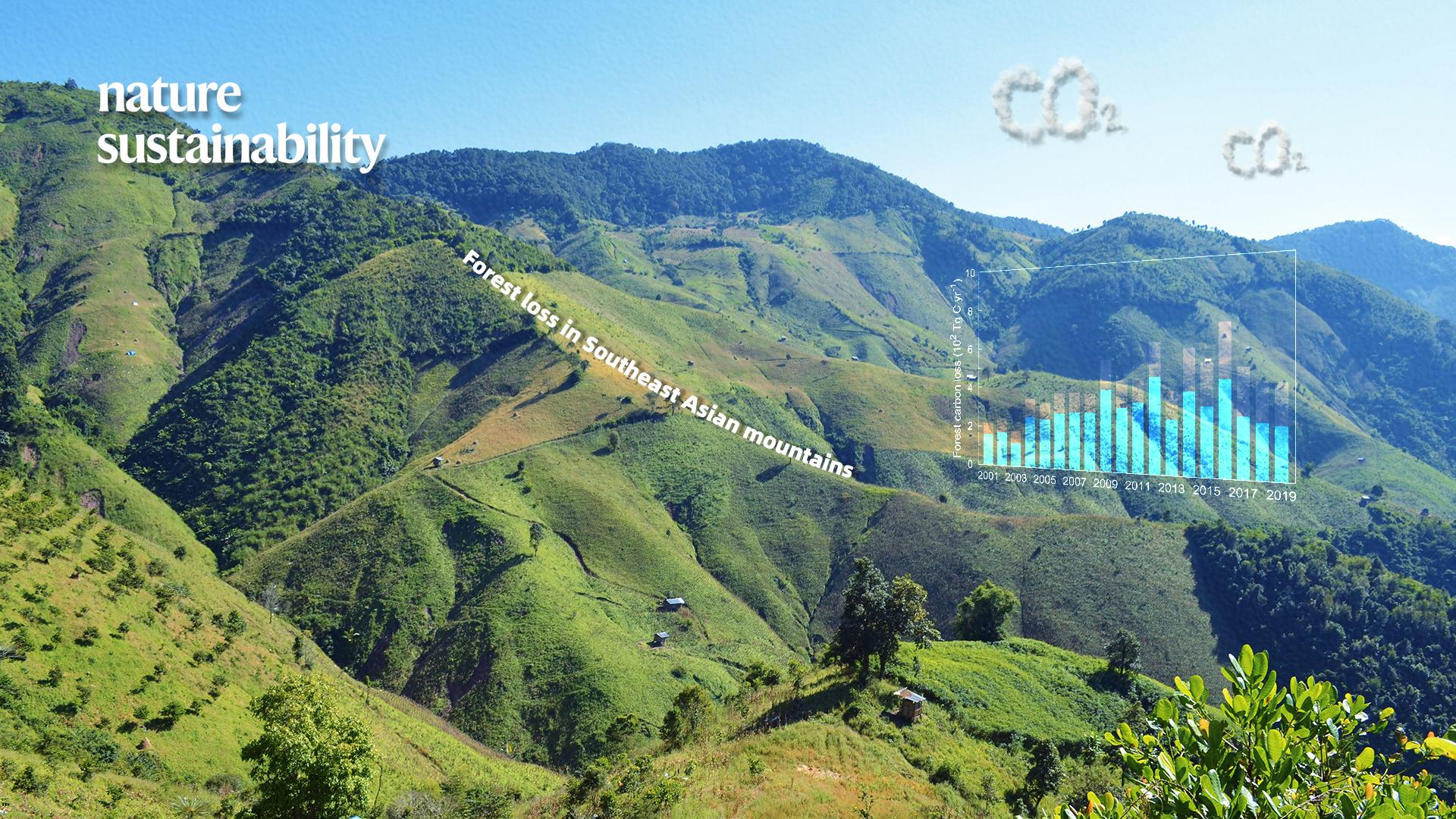
Most tropical deforestation is believed to occur in lowlands where forests are easy to access and deforested lands are feasible to plantations. However, recent studies have reported new croplands and plantations converted from mountain forests in Southeast Asia, generating a deeply divided debate on forest dynamics in the region. The study, entitled “Upward expansion and acceleration of forest clearance in the mountains of Southeast Asia,” was published on June 28 in Nature Sustainability. It uncovered forest loss dynamics and associated topographical patterns using multiple high-resolution satellite products of forest change and topography.
The authors found that forest clearance in the mountains of Southeast Asia has accelerated during the 21st century, accounting for a third of total forest loss in the region. New plantations primarily drove deforestation at high elevations. Zhenzhong Zeng, who led the research and works as an associate professor at SUSTech, visually interpreted high-resolution satellite imagery in Southeast Asia three years previously. He found substantial mountain forests converted to croplands, although mechanical and intensive plantations in the mountains are not technically possible and economically feasible.
“I was shocked by the tremendous deforestation in the mountains and think we should contribute to the sustainable development of forests. My Ph.D. student, Yu Feng, and I worked with Zhenzhong to figure out how Southeast Asia’s forests change. We combined multiple satellite data to quantify forest dynamics and associated topography, and surprisingly found accelerating mountain forest loss in the region,” said Professor Chunmiao Zheng of SUSTech.
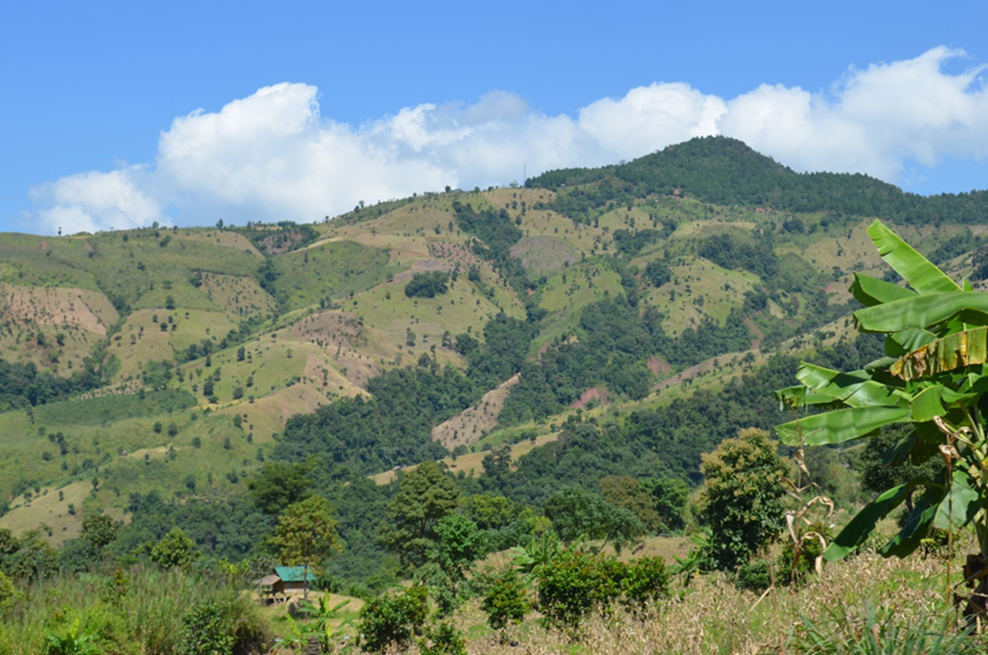
Figure 1. Example of massive forests that have been lost for cultivations in the mountains of Southeast Asia
The researchers discovered that the frontier of forest clearance climbed to higher elevations and steeper slopes where forests have high carbon stocks. This means that forest loss shifted to regions with high carbon stocks, resulting in more forest carbon loss than expected. Combining forest loss data with a forest biomass carbon map, they discovered that carbon loss resulting from forest clearance was mainly in the lowlands in the 2000s, e.g., Indonesia. In the 2010s, however, lowland forest carbon loss decreased while mountain forest carbon loss in regions like Myanmar and Laos increased significantly. As mountain forests hold more biomass carbon than lowland forests, accelerating mountain forest clearance exacerbated carbon stock loss in the region.
“I have spent three years doing a deforestation project in Nan Province, sponsored by the Kasikornbank and Princeton University, and took many pictures of mountain deforestation there as shown above. I’m glad to see the situation is becoming much better in Nan Province according to our new findings. Unfortunately, the situation of mountain deforestation is becoming worse in many other mountain regions of Southeast Asia,” said Professor Zeng.
“Forest loss in the lowlands of Southeast Asia has rightly received a lot of attention, but that has shifted focus from an emerging pattern of extensive loss in the mountains that is increasing rapidly and threatens many species found nowhere else,” said Paul Elsen, Climate Adaptation Scientist for the Wildlife Conservation Society (WCS) and one of the co-authors of the study.
Although multiple lines of evidence reveal that tropical forests likely act as a neutral contributor to the global carbon cycle, the accelerating clearance of mountain forests with high carbon density portends forest carbon loss in the near future. Consequently, this could potentially nudge Southeast Asia’s forests to be a net carbon source in the global carbon budget. Most deforested lands in the mountains have been turned into croplands, which may further intensify climate warming in the region through biochemical and biophysical feedbacks. The study provides important implications for regional land-use management and climate change adaption and mitigation.
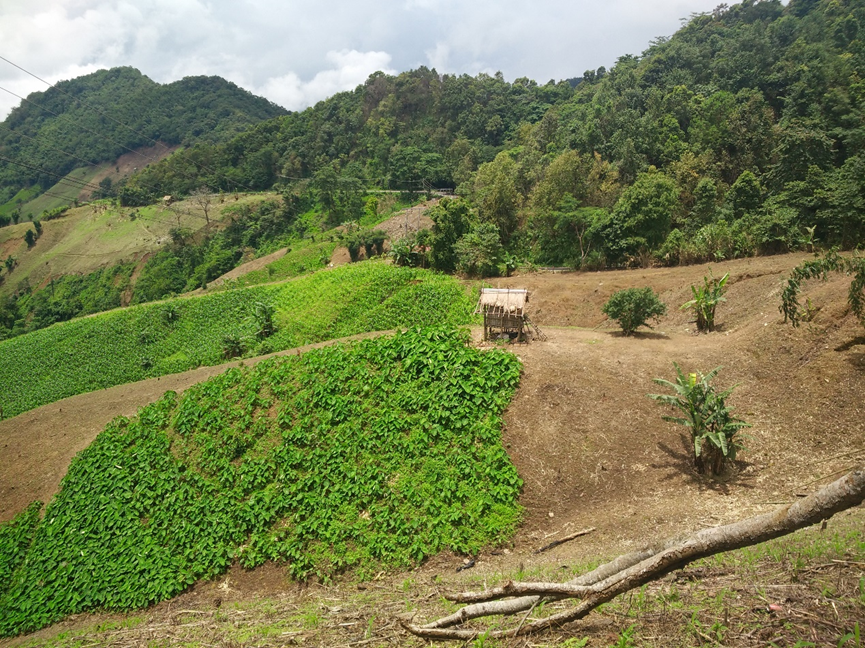
Figure 2. Corn and dasheen fields converted from forests in Southeast Asia
In addition to Associate Professor Zhenzhong Zeng, Yu Feng, Professor Chunmiao Zheng, and Dr. Paul Elsen are also co-authors of this study. Other researchers included Yang Liu, Xinyue He, and Xin Jiang of SUSTech, Professor Alan D. Ziegler of MaeJo University (MJU), and Professors Dominick V. Spracklen and Joseph Holden, both of the University of Leeds.
This project was supported in part by the National Natural Science Foundation of China (NSFC) and the start-up fund provided by SUSTech.
Paper link: https://www.nature.com/articles/s41893-021-00738-y
2026-03-10
2026-09-08
A delegation of 13 students from Southern University of Science and Technology (SUSTech), Zhejiang University and the University of Science and Technology of China (USTC), accompanied by four SUSTech faculty members including including two affiliated with the State Key Laboratory of Soil Pollution Control and Safety, concluded a 12-day summer school at Flinders University in August, 2026, hosted by the University’s National Centre for Groundwater Research and Training (NCGRT).Throughout the program, the students participated in a wide range of educational activities covering water resources, environmental health, groundwater modeling, managed aquifer recharge, salinity management, mining sites management, virtual reality hydrology, and nature-based solutions for surface water, groundwater and soil pollution.A highlight of the visit was a series of field trips showcasing South Australia’s unique natural environments. These included an overnight excursion to a global showcase of integrated surface and groundwater management exemplified by the Murray-Darling Basin. Visits to the St Kilda Mangroves highlighted ecohydrological approaches to coastal mangrove conservation. While Hallett Cove featured the most famous glacial striation on pre-Cambrian rocks. Happy Valley Reservoir, Oaklands Wetland, and Port Willunga Beach, with their wildlife, water management and well-exposed sedimentary rock formations, left strong impressions on our students. Students also attended research seminars and explored Flinders University’s teaching and research facilities.This summer school provided an excellent opportunity for students to engage with Flinders University staff, students, and researchers, experience Australian approaches to soil and groundwater pollution control and safety research, and strengthen the institutional ties between SUSTech and Flinders University, while fostering international connections and cross-cultural learning. The visit was made possible through a combination of support provided by SUSTech and the Fundamental and Interdisciplinary Disciplines Breakthrough Plan of the Ministry of Education of China(JYB2025XDXM909).During the visit, Chair Professor Yan ZHENG from SUSTech delivered a research seminar on arsenic detection in the developed and developing world. Flinders University noted that its academic community was privileged to learn from her expertise.SUSTech expresses its gratitude for the incredible partnership with Flinders University at the conclusion of the program.
2026-04-22
On April 22, the Frontiers Planet Prize announced its list of 25 National Champions for 2026. Hong WANG, a 2025 graduate of the School of Environmental Science and Engineering at the Southern Universi
2026-04-20
On the morning of April 17, 2026, a delegation from Flinders University (Australia), led by Professor Colin Stirling, President of Flinders University, visited the Southern University of Science and T
2026-04-08
Hydrological models are foundational tools for water resource management, agricultural planning, flood and drought mitigation, and ecosystem protection. A long-standing challenge in hydrology is devel
 |