

© 2026 All Rights Reserved. 粤ICP备14051456号
2021-08-06
View:10
Recently, Chair Professor Junguo Liu from the School of Environmental Science and Engineering at the Southern University of Science and Technology (SUSTech) co-authored a paper in Nature Food, an online journal publishing top-tier food-related research in the natural, applied, and social sciences. The paper was entitled “China's food loss and waste embodies increasing environmental impacts.”
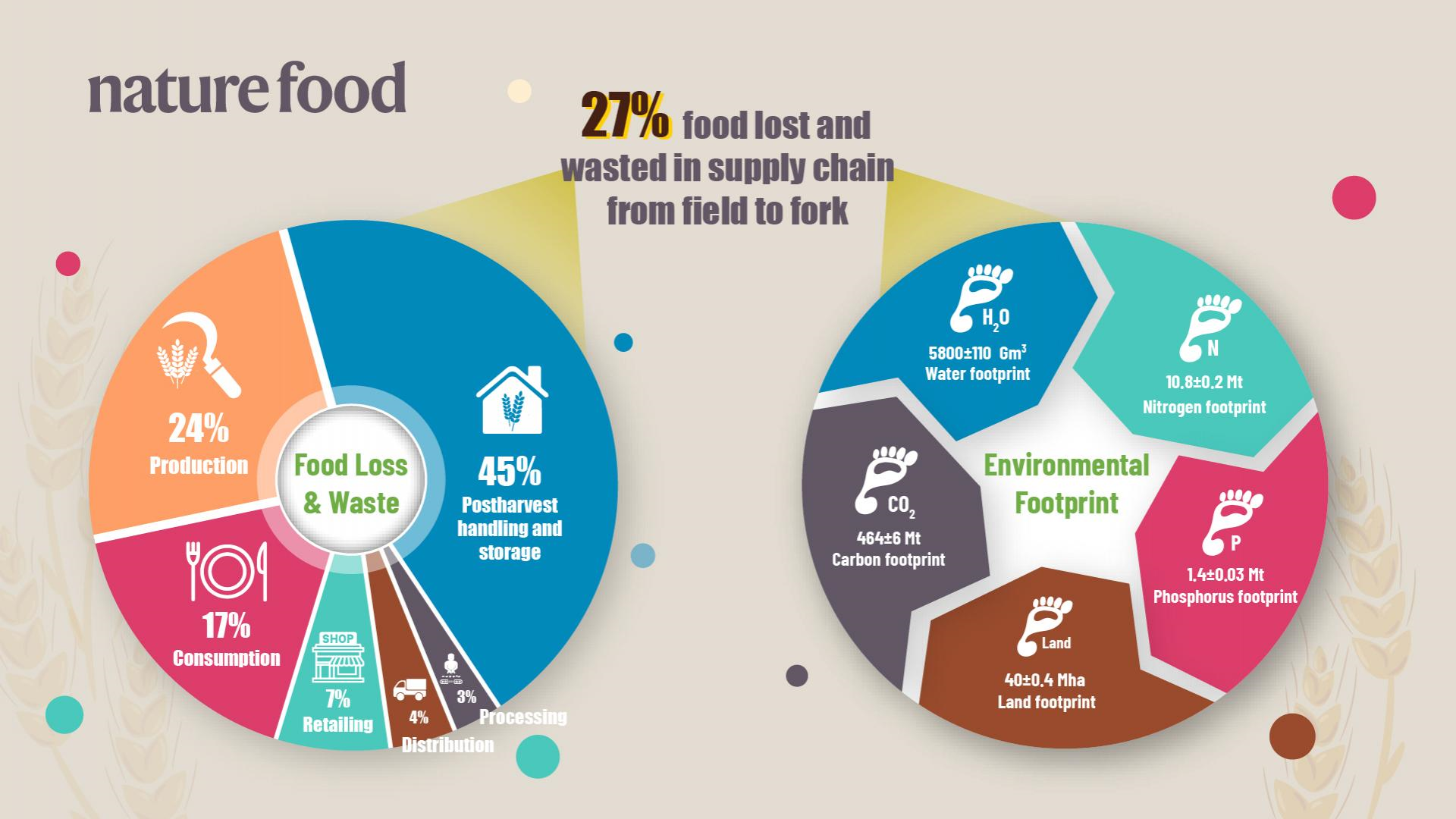
In recent years, food loss and waste have become a global problem, which has attracted widespread attention from academia, government, and the public. Food loss and waste are closely related to food security, food safety, nutrition and health, resources, environment, economy, and society. They are considered to be major environmental issues for the sustainable development of the global food system. However, monitoring and benchmarking food loss and waste reduction is often constrained by the lack of reliable and consistent data, especially for emerging economies.
This research is based on the large-scale field investigations conducted by the Ministry of Agriculture and Rural Affairs and the Chinese Academy of Sciences (CAS) from 2013 to 2018 on food losses in the supply chain, food waste in households, and catering industries. It quantifies the food loss and waste of major agrifood products along the entire farm-to-fork chain in China.
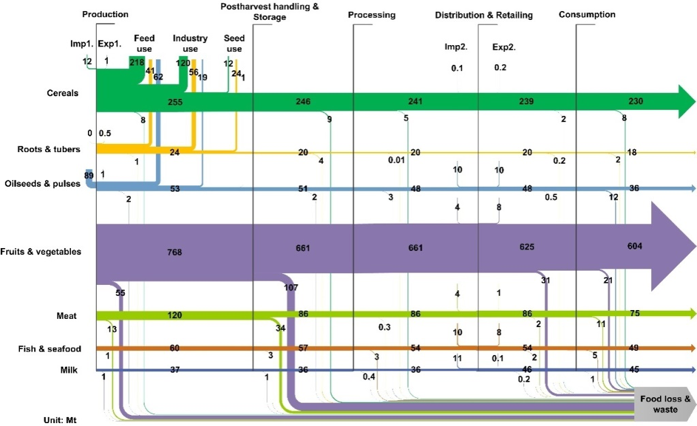
Figure 1. Food flow and waste in China’s supply chain from the farm to the table
The result shows that 27% of food annually produced for human consumption in the country (349 ± 4 Mt) is lost or wasted. 45% of this is associated with postharvest handling and storage and 17% with consumption activities. The paper also shows that the land, water, carbon, nitrogen, and phosphorus footprints associated with total food loss and waste are similar to those of a medium-sized country, such as the United Kingdoms, in the case of carbon footprint.
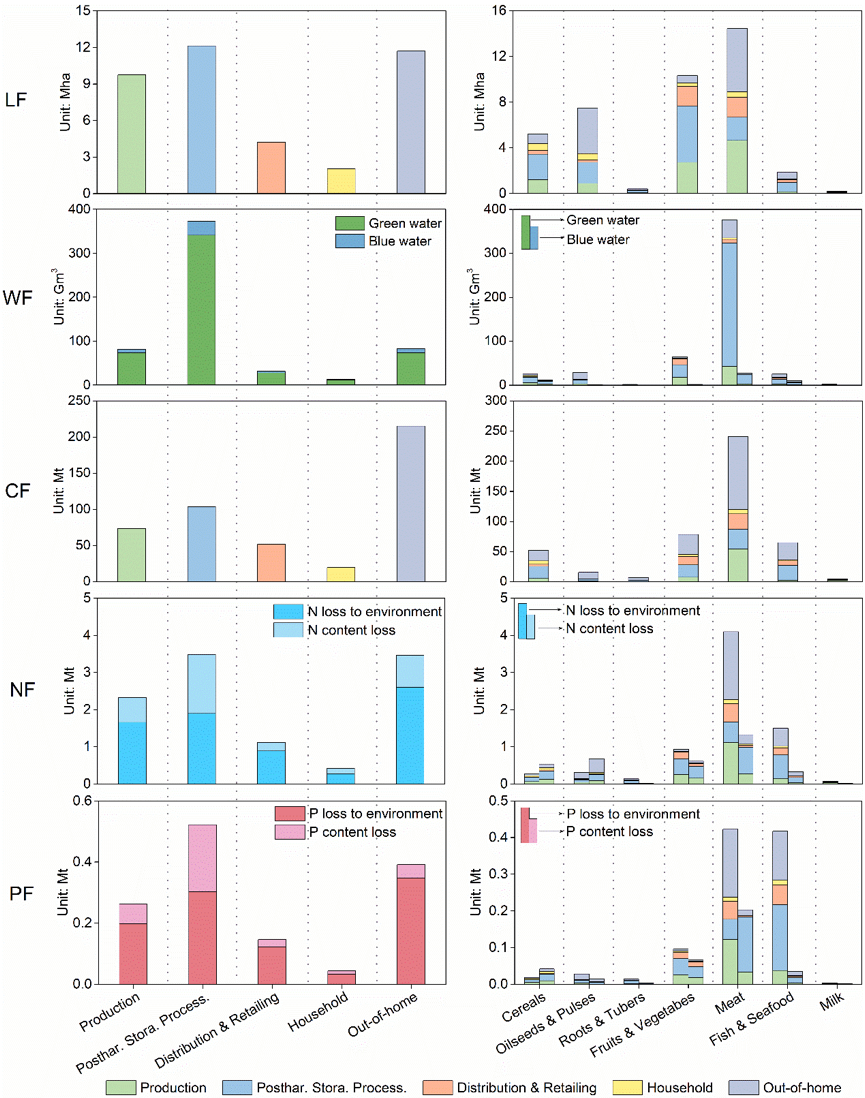
Figure 2. Land footprint, water footprint, carbon footprint, nitrogen footprint, and phosphorus footprint of food waste in China
These results highlight that food loss and waste in China have a greater impact on resources and the environment. Reducing food waste at the consumption stage has a significant effect on reducing various environmental footprints.
This paper is the work of a collaborative effort between researchers from the Chinese Academy of Sciences (CAS), the University of Southern Denmark, Ministry of Agriculture (MOA) of the People’s Republic of China, Wuhan University, the University of Pennsylvania, and SUSTech.
It is worth mentioning that Junguo Liu was one of the earliest scholars in China who paid attention to food waste and its environmental impact. In 2013, as the first corresponding author, he published an article entitled “Food Loss and Waste in China and their Implication for Water and Land” in Environmental Science and Technology (ES&T). The results showed that food waste and food loss have a huge environmental impact on water and land resources. The food waste rate in China is 19% (+5%), which is far lower than the waste rate in the United States and European countries. The study found that the food waste rate in Chinese canteens and households is only 5-7%, but the food waste rate in restaurants is as high as 19%. This shows that Chinese food culture and habits play an important role in influencing the rate of food waste.
Paper links:
https://www.nature.com/articles/s43016-021-00317-6
https://pubs.acs.org/doi/10.1021/es401426b
2026-03-10
2026-09-08
A delegation of 13 students from Southern University of Science and Technology (SUSTech), Zhejiang University and the University of Science and Technology of China (USTC), accompanied by four SUSTech faculty members including including two affiliated with the State Key Laboratory of Soil Pollution Control and Safety, concluded a 12-day summer school at Flinders University in August, 2026, hosted by the University’s National Centre for Groundwater Research and Training (NCGRT).Throughout the program, the students participated in a wide range of educational activities covering water resources, environmental health, groundwater modeling, managed aquifer recharge, salinity management, mining sites management, virtual reality hydrology, and nature-based solutions for surface water, groundwater and soil pollution.A highlight of the visit was a series of field trips showcasing South Australia’s unique natural environments. These included an overnight excursion to a global showcase of integrated surface and groundwater management exemplified by the Murray-Darling Basin. Visits to the St Kilda Mangroves highlighted ecohydrological approaches to coastal mangrove conservation. While Hallett Cove featured the most famous glacial striation on pre-Cambrian rocks. Happy Valley Reservoir, Oaklands Wetland, and Port Willunga Beach, with their wildlife, water management and well-exposed sedimentary rock formations, left strong impressions on our students. Students also attended research seminars and explored Flinders University’s teaching and research facilities.This summer school provided an excellent opportunity for students to engage with Flinders University staff, students, and researchers, experience Australian approaches to soil and groundwater pollution control and safety research, and strengthen the institutional ties between SUSTech and Flinders University, while fostering international connections and cross-cultural learning. The visit was made possible through a combination of support provided by SUSTech and the Fundamental and Interdisciplinary Disciplines Breakthrough Plan of the Ministry of Education of China(JYB2025XDXM909).During the visit, Chair Professor Yan ZHENG from SUSTech delivered a research seminar on arsenic detection in the developed and developing world. Flinders University noted that its academic community was privileged to learn from her expertise.SUSTech expresses its gratitude for the incredible partnership with Flinders University at the conclusion of the program.
2026-04-22
On April 22, the Frontiers Planet Prize announced its list of 25 National Champions for 2026. Hong WANG, a 2025 graduate of the School of Environmental Science and Engineering at the Southern Universi
2026-04-20
On the morning of April 17, 2026, a delegation from Flinders University (Australia), led by Professor Colin Stirling, President of Flinders University, visited the Southern University of Science and T
2026-04-08
Hydrological models are foundational tools for water resource management, agricultural planning, flood and drought mitigation, and ecosystem protection. A long-standing challenge in hydrology is devel
 |