

© 2026 All Rights Reserved. 粤ICP备14051456号
2023-02-20
View:19
Uncertainty in sea level rise and future extreme climate events presents a great planning challenge for flood defence in coastal mega cities like Shanghai. While academic literature has largely focused on uncertainty analysis, engineering solution design requires effective uncertainty management.

Research Professor Zhan Tian’s and Chair Professor Junguo Liu’s teams from the School of Environmental Science and Engineering at the Southern University of Science and Technology (SUSTech) have recently developed a framework that assesses the impacts of high rates of changes on the flood defence systems in Shanghai.
Their paper, entitled “Dynamic adaptive engineering pathways for mitigating flood risks in Shanghai with regret theory,” has been published in Nature Water, a renowned journal covering research on the evolving relationship between water and society.
This study uses the “regret” theory of economics and management science to establish management principles and procedures for engineering solutions to deal with the deep uncertainty of climate change. Prof. Tian’s team developed a full-chain multi-model coupling framework, from the analysis of climate change uncertainty to deterministic engineering solutions, to quantitatively analyze the flood control capabilities of various water management engineering solutions for Shanghai, China’s largest coastal city and economic center.
The researchers assess the effectiveness of “determined” engineering measures such as raising flood walls and building tide gates at the mouth of the Huangpu River to prevent extreme compound flood disasters in Shanghai, and provide specific dynamic implementation pathway diagrams.
The term “regret” describes the human emotional experience when one or more non-chosen alternatives perform better than the chosen alternative in one or more standard aspects. People (a) often feel regret and (b) tend to predict and avoid future experiences of regret. More importantly, (c) avoiding regret is different from preventing risk. For example, the expected loss value of an extreme flood event may be small because its probability of occurrence is small. Still, the psychological costs and widespread negative emotions caused by inadequate or failed defense systems may be very high. In recent years, economics has formalized (a) – (c) into rigorous “regret” theory.
The research team has established a practical method for managing deep uncertainty using Shanghai as an example of responding to climate change flood risks. The specific procedure includes (a) special attention to scenarios that may be “most regretful (worst)” (Figure 1), (b) designing intervention measures for future thresholds so that the response to the main uncertainty is transformed into the date when the corresponding intervention measures are called, and (c) monitoring key climate change variables to update predictions and intervention timing in a timely manner (Figure 2). This provides support for decision-makers to formulate flood risk prevention and control measures and plans that are long-term, effective, and flexible.
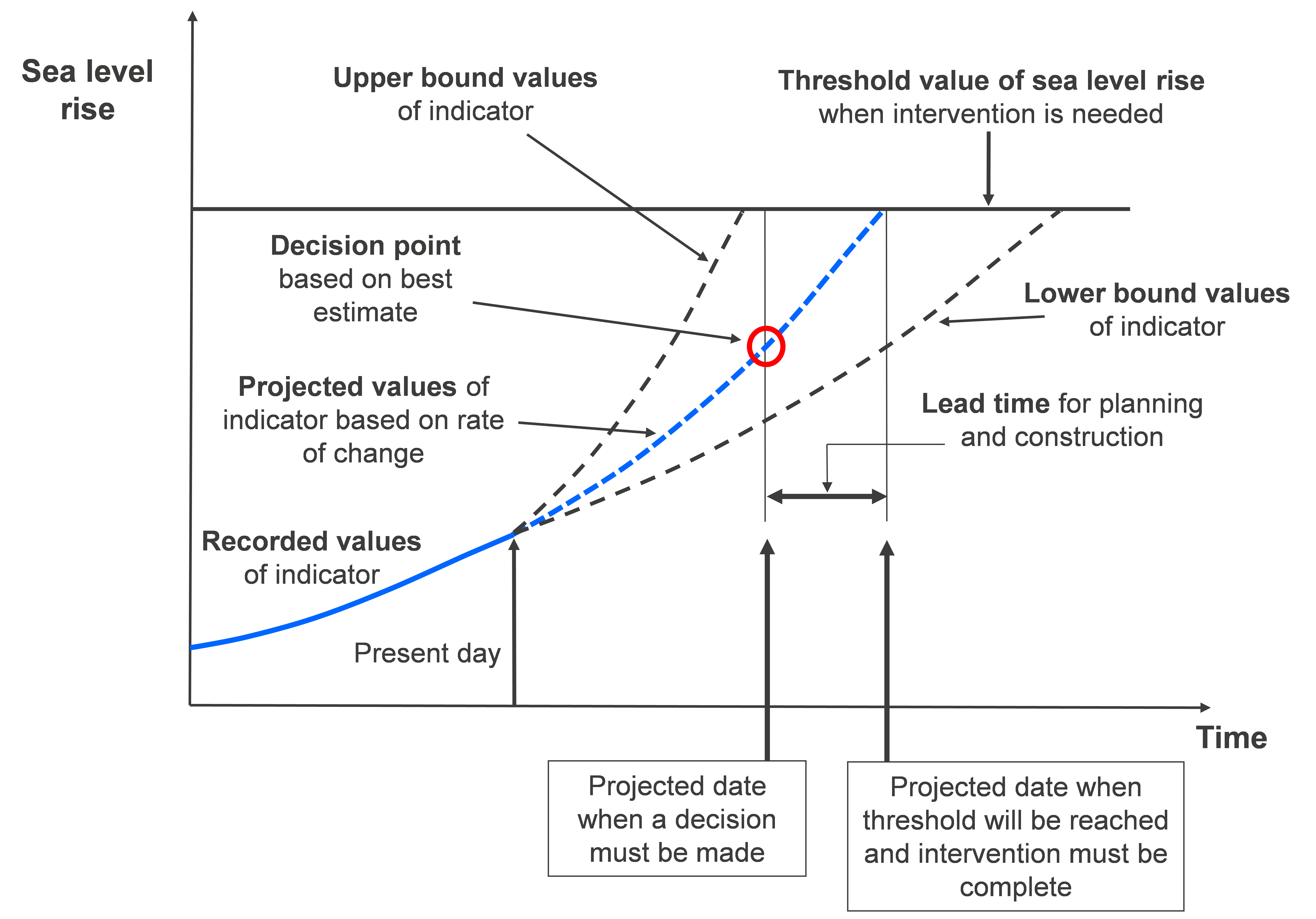
Figure 1. Principle 1 of Uncertainty Management: Taking sea level rise as an example
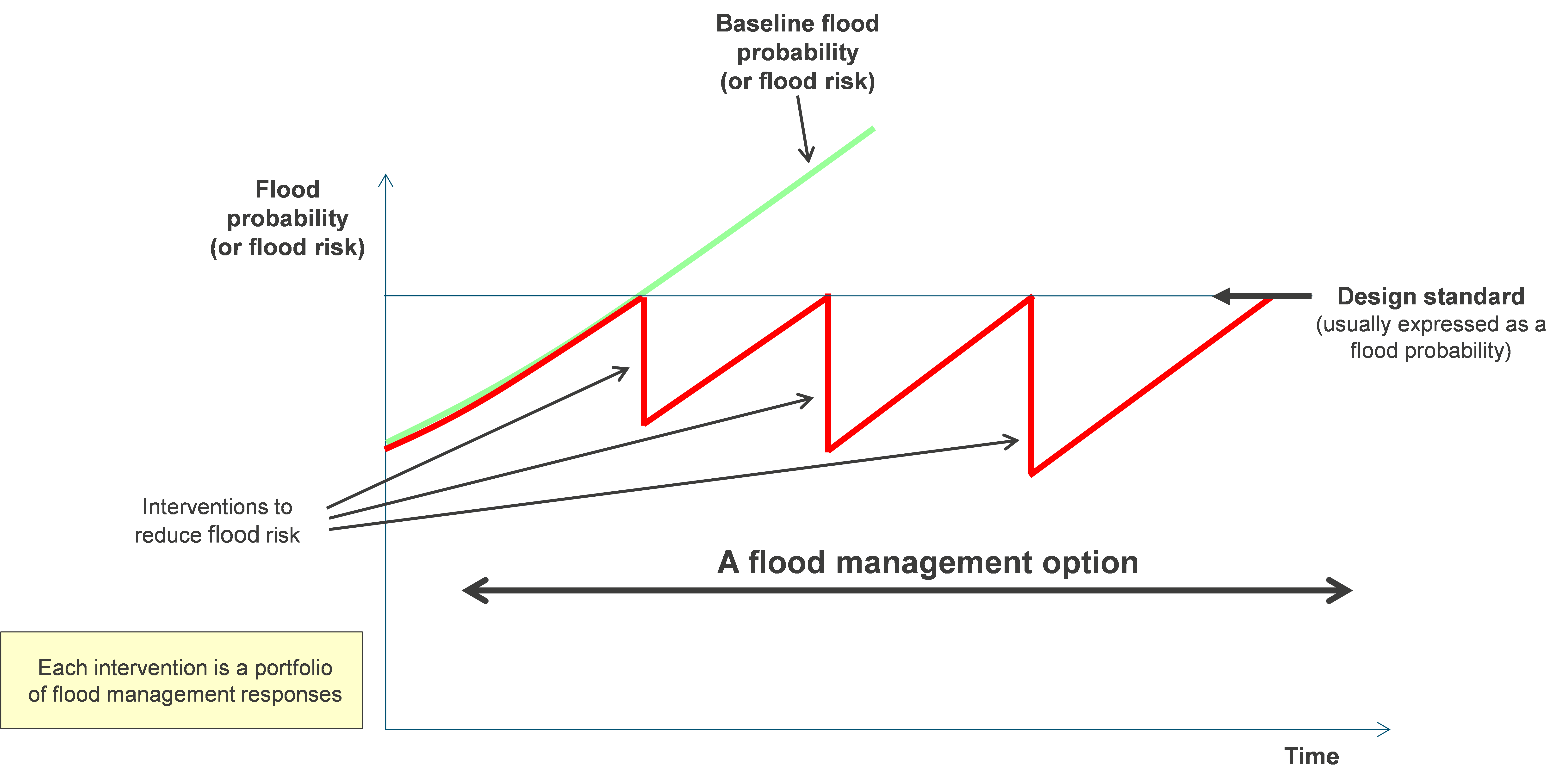
Figure 2. Principle 2 of Uncertainty Management: The relationship between threshold and intervention time
The study first set multiple scenarios of extreme compound flood disasters that could be the “worst” for Shanghai: a thousand-year high tide (6.92 meters) plus the upstream flow of 350 m3/s, drainage inflow of 2000 m3/s, 4000 m3/s, and 6000 m3/s from pumping stations, when relative sea level rises by 0.5, 1, 2, and 3 meters. To prevent such extreme compound flood disasters, the research team evaluated the practical effects of three types of engineering measures: (i) raising the flood wall, (ii) constructing a tide gate at the river mouth, and (iii) jointly implementing engineering measures (i) and (ii). Based on the no-regret principle in the “regret” theory, they established dynamic implementation pathways for Shanghai to cope with extreme compound flood events.
Figure 3 places the positions of specific alternative measures in a comprehensive framework to show plausible dynamic adaptive pathways that can mitigate extreme flood risk without regret. The blue arrow lines show an example of a possible adaptive pathway: 1) raise the height of the flood wall upstream of Huangpu River to meet the defense standard until the tide gate is built; 2) Construct a tide gate at the mouth of Huangpu River to cope with future sea level rise and raise the height of the downstream flood wall; 3) When sea level rise causes the tide gate to reach its maximum number of closures, raise the height of the upstream flood wall (about 0.5 meters); 4) When the height of the upstream flood wall is raised, and the tide gate reaches its maximum number of closures again, further raise the height of the upstream flood wall (about 0.5 meters); 5) As sea level rises and tide gate closures become more frequent, it may be necessary to add a ship lock to ensure navigation.
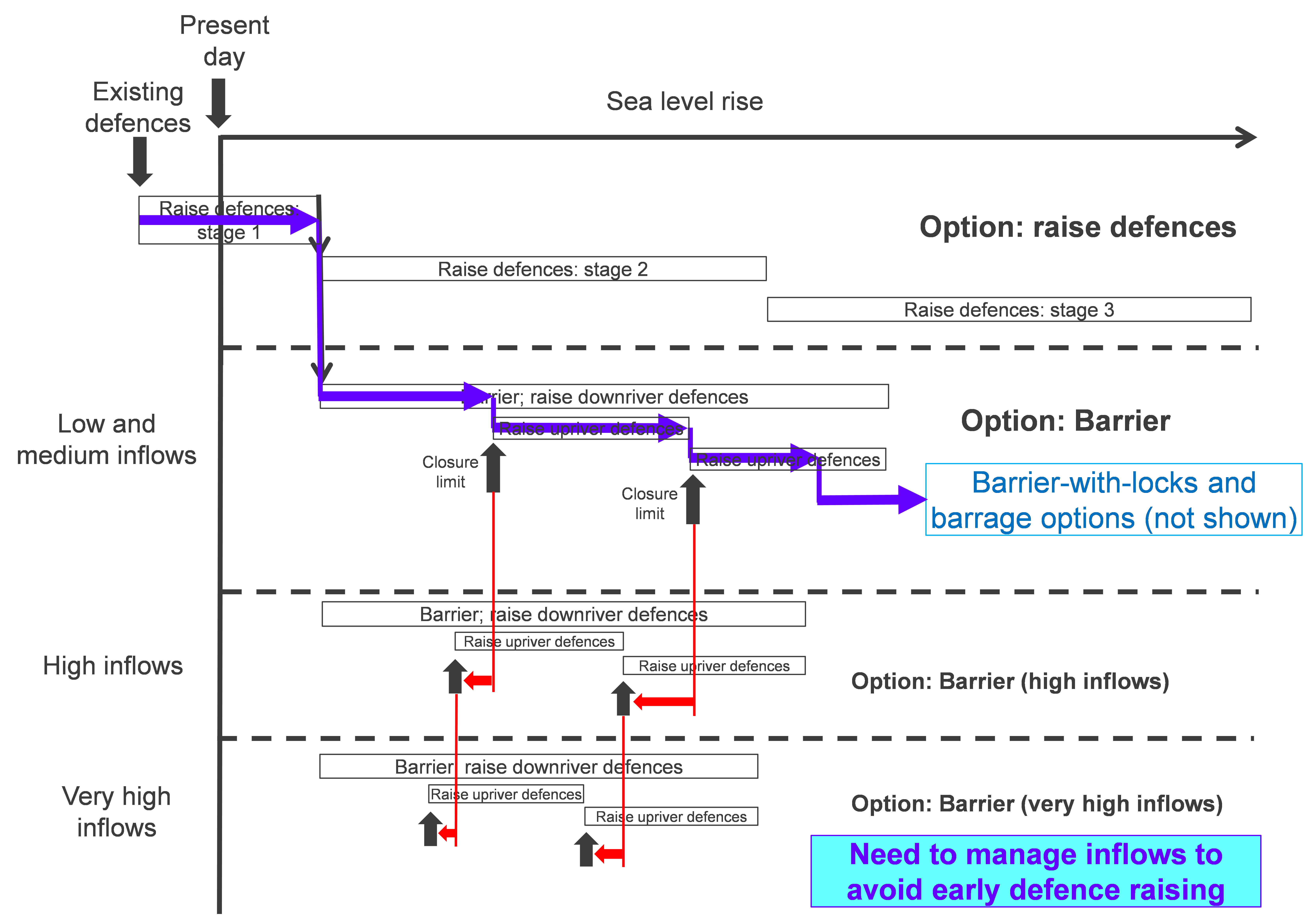
Figure 3. An example of the sequential selection and dynamic implementation pathway of flood control engineering measures in Shanghai
The journal Nature Water specially published a two-page new paper introducing this study. This work bridges the gap between the uncertainty analysis of climate change and the uncertainty of engineering solution design. It enriches and develops the basic theories and methods of flood risk assessment under climate change, providing an important scientific basis for relevant policy formulation.
Research Prof. Tian Zhan at SUSTech is the first author of this paper. Chair Prof. Liu Junguo is a collaborator, and Prof. Laixiang Sun from the School of Oriental and African Studies (SOAS) at the University of London is the corresponding author. SUSTech is the first affrication of the paper.
This study was supported by the National Natural Science Foundation of China (NSFC), Chinese Flood Project of the UK Royal Academy of Engineering, and Chinese Academy of Engineering.
Paper Link: https://doi.org/10.1038/s44221-022-00017-w
2026-03-10
2026-09-08
A delegation of 13 students from Southern University of Science and Technology (SUSTech), Zhejiang University and the University of Science and Technology of China (USTC), accompanied by four SUSTech faculty members including including two affiliated with the State Key Laboratory of Soil Pollution Control and Safety, concluded a 12-day summer school at Flinders University in August, 2026, hosted by the University’s National Centre for Groundwater Research and Training (NCGRT).Throughout the program, the students participated in a wide range of educational activities covering water resources, environmental health, groundwater modeling, managed aquifer recharge, salinity management, mining sites management, virtual reality hydrology, and nature-based solutions for surface water, groundwater and soil pollution.A highlight of the visit was a series of field trips showcasing South Australia’s unique natural environments. These included an overnight excursion to a global showcase of integrated surface and groundwater management exemplified by the Murray-Darling Basin. Visits to the St Kilda Mangroves highlighted ecohydrological approaches to coastal mangrove conservation. While Hallett Cove featured the most famous glacial striation on pre-Cambrian rocks. Happy Valley Reservoir, Oaklands Wetland, and Port Willunga Beach, with their wildlife, water management and well-exposed sedimentary rock formations, left strong impressions on our students. Students also attended research seminars and explored Flinders University’s teaching and research facilities.This summer school provided an excellent opportunity for students to engage with Flinders University staff, students, and researchers, experience Australian approaches to soil and groundwater pollution control and safety research, and strengthen the institutional ties between SUSTech and Flinders University, while fostering international connections and cross-cultural learning. The visit was made possible through a combination of support provided by SUSTech and the Fundamental and Interdisciplinary Disciplines Breakthrough Plan of the Ministry of Education of China(JYB2025XDXM909).During the visit, Chair Professor Yan ZHENG from SUSTech delivered a research seminar on arsenic detection in the developed and developing world. Flinders University noted that its academic community was privileged to learn from her expertise.SUSTech expresses its gratitude for the incredible partnership with Flinders University at the conclusion of the program.
2026-04-22
On April 22, the Frontiers Planet Prize announced its list of 25 National Champions for 2026. Hong WANG, a 2025 graduate of the School of Environmental Science and Engineering at the Southern Universi
2026-04-20
On the morning of April 17, 2026, a delegation from Flinders University (Australia), led by Professor Colin Stirling, President of Flinders University, visited the Southern University of Science and T
2026-04-08
Hydrological models are foundational tools for water resource management, agricultural planning, flood and drought mitigation, and ecosystem protection. A long-standing challenge in hydrology is devel
 |